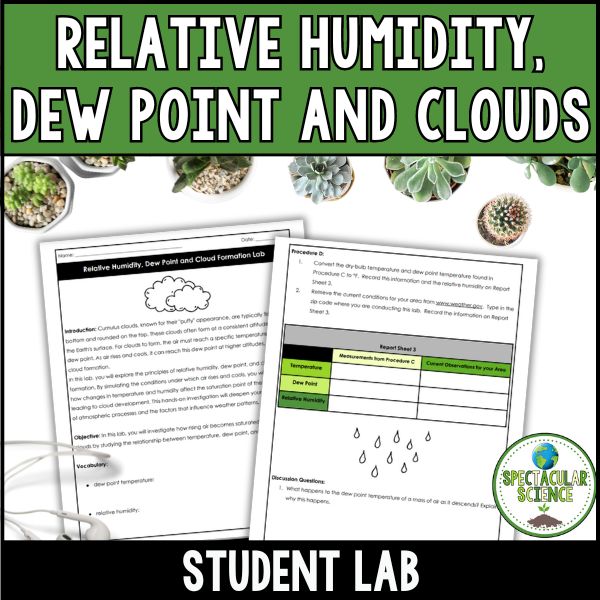
In this Relative Humidity, Dew Point and Cloud Formation Lab, students investigate the process by which rising air becomes saturated, leading to the formation of clouds. Taking the learning outdoors, they utilize a sling psychrometer to measure both wet-bulb and dry-bulb temperatures.
$4.00
Description:
Bring atmospheric science to life with this hands-on Relative Humidity, Dew Point, and Cloud Formation Lab. Students step into the role of meteorologists as they use sling psychrometers to measure wet-bulb and dry-bulb temperatures, calculate humidity and dew point, and connect their findings to real-world cloud formation and weather patterns.
Why Teachers Love This Lab:
✔ Real Data, Real Science – Students collect and analyze authentic atmospheric measurements
✔ Strong Real-World Connections – Helps students understand how meteorologists study humidity and predict weather
✔ Builds Critical Thinking Skills – Students interpret data, make calculations, and explain atmospheric processes
✔ Flexible for Multiple Levels – Easily adapted for middle school through high school learners
✔ Clear, Structured Flow – Simple to implement with guided steps for both students and teachers
What’s Included?
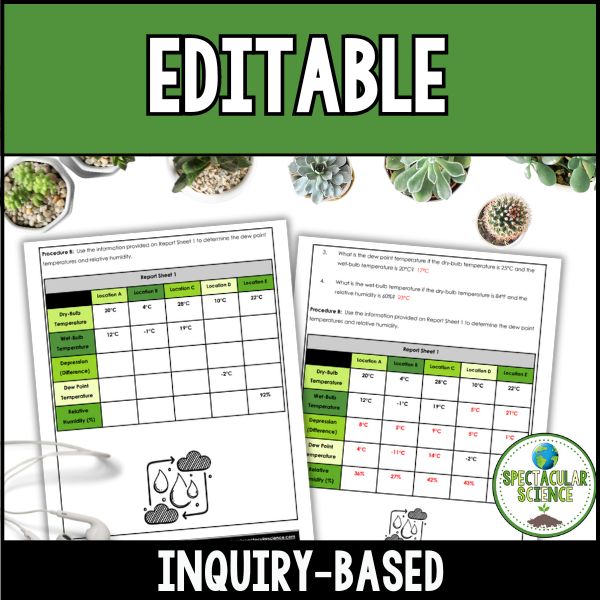
Student Lab with step-by-step procedures, data tables, and analysis questions
Instructor Answer Key with calculations, explanations, and guidance
Detailed Teacher Guide to support setup, instruction, and deeper discussion
Required Materials:
Sling psychrometers (required for outdoor data collection)
Get students out of their seats and into the science of the atmosphere with this engaging, ready-to-use lab that makes cloud formation something they can actually measure and understand.
⭐ Looking for quality resources and time-saving tips for your secondary science classroom? ☑ Follow Spectacular Science on TPT ☑ Subscribe to My Newsletter ☑ Check Out My Blog
☑ Follow Me on Instagram
If you have any questions, please do not hesitate to ask.
Thanks for visiting!
Jessica