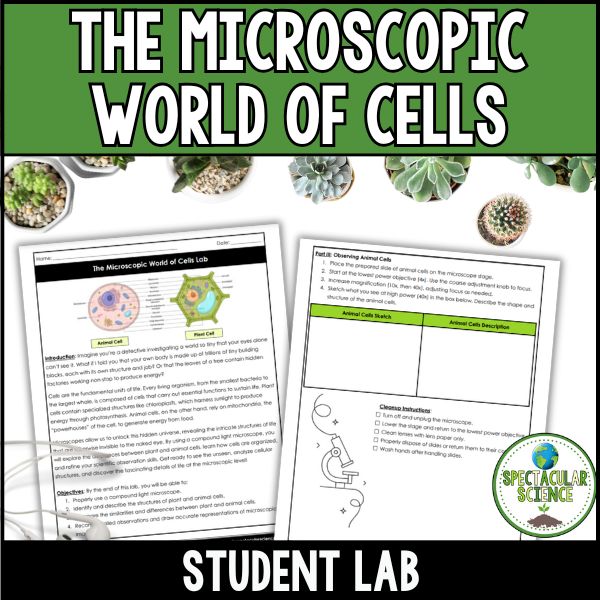
Bring the invisible world to life with this hands-on Microscope World of Cells Lab! In this engaging activity, students learn how to properly use a compound light microscope while exploring the structures of both plant and animal cells. As they observe, sketch, and compare cells, they develop essential microscopy skills and gain a deeper understanding of the building blocks of life.
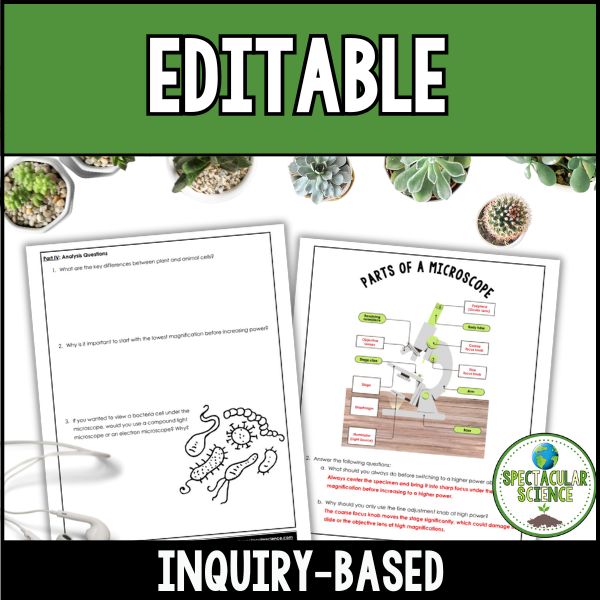
Students begin by learning microscope fundamentals, including identifying microscope parts, adjusting focus, and understanding how magnification affects the field of view. They then examine prepared slides of plant and animal cells, record observations, create scientific drawings, and analyze similarities and differences between cell types. Throughout the lab, students make connections between microscopic observations and larger biological concepts.
To encourage deeper thinking, students answer analysis questions focused on cell structure, microscope techniques, and the role microscopes have played in advancing fields such as medicine, genetics, and microbiology.
Why Teachers Love This Lab
✔ Hands-on and highly engaging
✔ Builds essential microscope skills students need for future biology labs
✔ Reinforces cell theory and cell structure concepts
✔ Develops observation, scientific drawing, and data analysis skills
✔ Encourages critical thinking and real-world scientific connections
✔ Works well as an introductory cell biology lab or microscope skills review
What’s Included
- Student lab worksheet with step-by-step instructions
- Analysis and reflection questions
- Instructor answer key
- Comprehensive Teacher Guide featuring:
- Learning objectives
- NGSS alignment
- Teacher implementation notes
- Setup and preparation tips
- Teacher scripts and facilitation suggestions
- Student learning breakdown
- Look-fors and formative assessment opportunities
- Common misconceptions
- Differentiation strategies
- Extension activities
- Classroom management tips
- Assessment suggestions
- Real-world connections
Materials Needed
- Compound light microscopes
- Prepared slides of plant and animal cells
- Methylene blue stain (for cheek cells, if needed)
- Lens paper
- Coverslips
This lab is ideal for middle and high school life science and biology classrooms. It provides an authentic scientific experience while helping students build confidence using one of the most important tools in biology. Your students won’t just learn about cells—they’ll see them firsthand and think like real scientists.