Teaching Energy Flow in Ecosystems to Secondary Students

Teaching Energy Flow in Ecosystems to Secondary Students

Teaching secondary students about energy flow in ecosystems is a crucial part of their ecological journey. Understanding how energy moves through the natural world is essential not only for their academic knowledge but also for cultivating an appreciation of the delicate balance that sustains life on Earth. Let’s explore effective

Read More
5 Environmental Science Activities for Thanksgiving

5 Environmental Science Activities for Thanksgiving

If you’re looking to combine real-world applications for learning in environmental science with some seasonal science activities for Thanksgiving, then keep reading! Integrating environmental science concepts with Thanksgiving is a creative way to teach students about sustainability, conservation, and gratitude for the Earth’s resources.  Here are 5 environmental science activities

Read More
Forecasting Success When Teaching Weather And Climate

Forecasting Success When Teaching Weather And Climate

Teaching weather and climate is a staple in Earth Science and it’s one of my favorite units to teach. The power and unpredictability of severe weather phenomena like hurricanes, tornadoes, and thunderstorms evoke both fear and awe.  It’s an area of study that can easily grab students’ attention and then

Read More
How To Make Inquiry-Based Learning Part of Your Science Lessons

How To Make Inquiry-Based Learning Part of Your Science Lessons

You’ve probably heard the term inquiry-based learning at some point in your teaching journey. There has been a significant push for this approach in recent years, and professional development sessions often highlight its benefits. However, implementing it effectively can be overwhelming. If you’ve ever felt enthusiastic after a PD session

Read More
Teaching the Greenhouse Effect to Middle and High School Students

Teaching the Greenhouse Effect to Middle and High School Students

As science teachers, one of our most important tasks is to convey complex scientific concepts in an engaging and accessible manner. Among these, the greenhouse effect stands as a cornerstone of climate science and environmental studies. Explaining it effectively to middle and high school students can be both challenging and

Read More
Here are 5 differentiation strategy options for middle and high school science teachers to support students in their science classroom.

5 Differentiation Strategies for Middle and High School Science

Science teachers are well aware that the subject matter they teach can pose significant challenges for students, particularly due to its specialized vocabulary and abstract concepts. Recognizing this, it becomes imperative to embrace differentiation strategies that cater to the diverse needs of all students. Among the various aspects of differentiation,

Read More
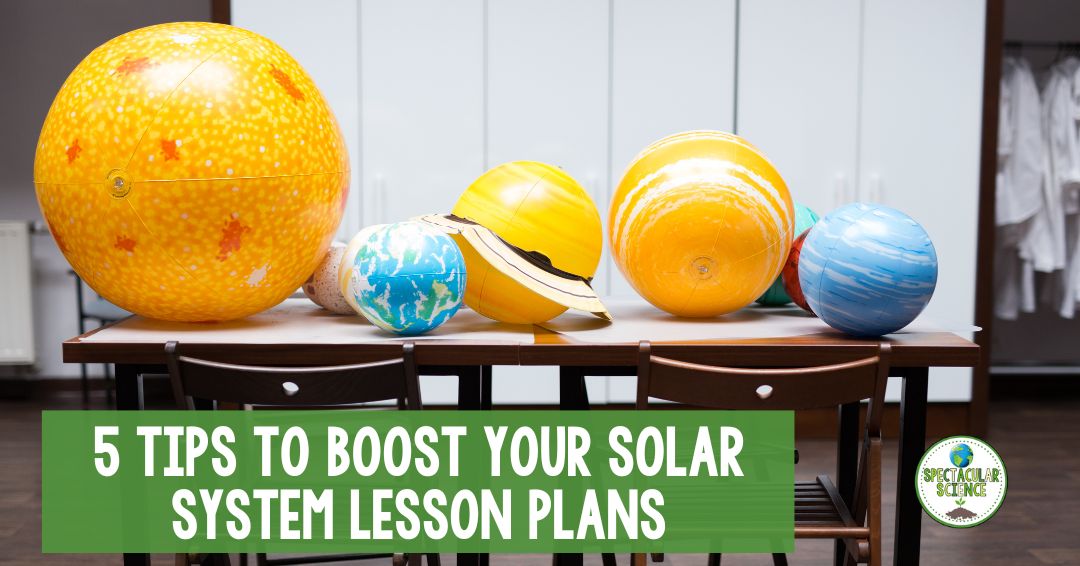
Check out these 5 teacher tips to boost your solar system lesson plans for middle school and high school science class.

5 Tips to Boost Your Solar System Lesson Plans

Every year I love when it’s time to use my solar system lesson plans. Whether teaching middle school or high school, the exploration of outer space and delving into solar system questions never fails to captivate both teachers and students alike. The sheer fascination surrounding this topic allows for diverse

Read More
Using Reflection to Build Strong Teacher-Student Relationships

Using Reflection to Build Strong Teacher-Student Relationships

Throughout the school year, we as teachers focus on building relationships between teachers and students. These teacher-student relationships create an in-class dynamic that supports the social and academic development of students, and often makes the work in the classroom, especially for classroom management, easier.  But as we close out a

Read More
Outdoor Learning Activities and Benefits for High School

Outdoor Learning Activities and Benefits for High School

When the weather is nice, do you find your students (and yourself!) staring out the window and wishing you were outside rather than in the classroom? I absolutely do – so why not take the learning outside when you can? Outdoor learning doesn’t have to be a significant investment in

Read More