Why Students Will Love This Lab:
✔ Immersive & Realistic – Students take on the role of environmental scientists tackling an oil spill.
✔ Hands-On Experimentation – They’ll test various cleanup materials to determine the most effective solutions.
✔ Critical Thinking & Problem-Solving – Encourages students to weigh the effectiveness of cleanup methods against their environmental impact.
✔ Real-World Connections – Helps students understand the complexities of oil spill response and its impact on marine ecosystems.
What’s Inside:
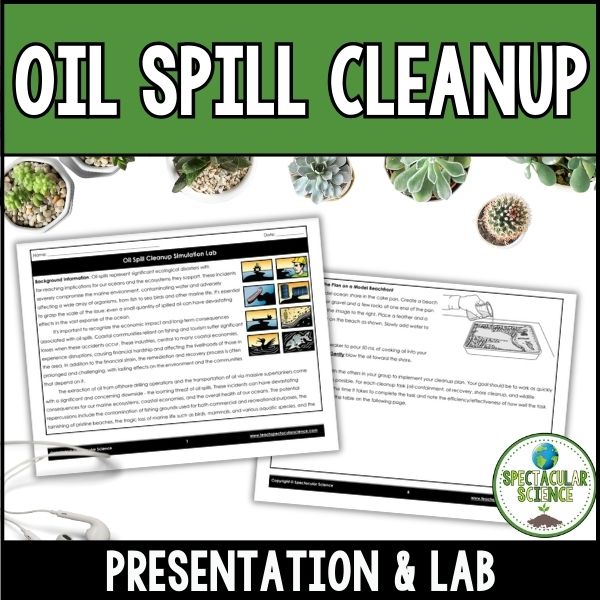
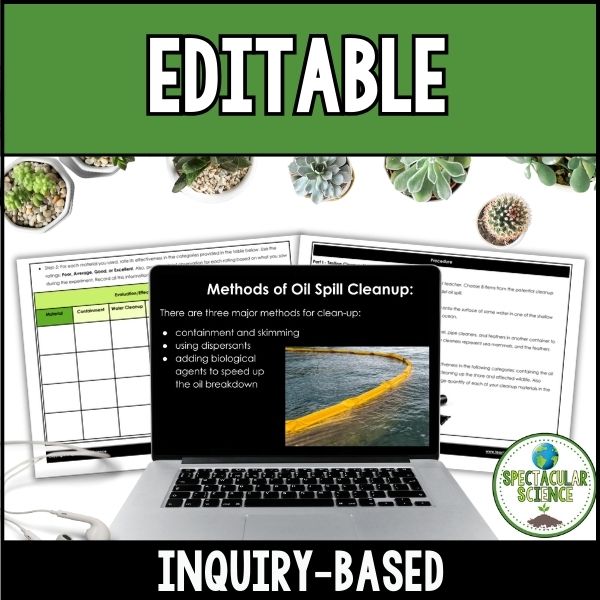
- Oil Spill Cleanup Presentation – A visually engaging slideshow to introduce the topic, activate prior knowledge, and build understanding of real-world oil spill impacts and response strategies.
- Student Lab Instructions – Step-by-step guidance for setting up and conducting the simulation, including Part I material testing, Part II plan design, and Part III model beach cleanup.
- Instructor Answer Key – A ready-to-use reference for easy grading with sample responses, example data tables, and expected outcomes.
- Comprehensive Teacher Guide – Everything you need to confidently run the lab from start to finish, including classroom setup recommendations, explicit pre-lab preparation checklist, safety and disposal procedures, materials substitution options, step-by-step facilitation tips during each phase of the simulation, common student misconceptions with responsive teaching strategies, a sample or exemplar cleanup plan, and final teacher insights to support debrief and extension discussions.
- Analysis & Reflection Questions – Thought-provoking prompts to encourage deeper discussion around environmental impact, engineering design, and real-world application.
Required Materials (Per Group):
- Potential Cleanup Materials:
-
Spoons, craft sticks, toothpicks, dip nets, drinking straws
-
Plastic wrap, aluminum foil, pieces of plastic foam, string
-
Brown paper bag pieces, cotton balls, nylon stocking pieces, sponge pieces
-
Paper towels, coffee filters, cloth, wood shavings, sawdust
-
Liquid detergent, cat litter, baking soda, flour, vinegar
Teacher Tip: Before starting the lab, have students predict which cleanup materials will be most effective and explain their reasoning. This encourages critical thinking before they begin experimenting!
Perfect for middle and high school students, this lab brings environmental science to life, fostering curiosity, problem-solving skills, and environmental awareness. Whether you’re covering ecosystems, pollution, or human impact on the environment, this lab is an engaging and impactful addition to your curriculum!
If you have any questions, please do not hesitate to ask.
Thanks for visiting!
Jessica