





Missed labs. They happen. A student is sick, a field trip runs long, someone forgets to set an alarm… and suddenly your carefully planned, hands-on lab feels like a logistical nightmare.
But here’s the truth: missed labs don’t have to derail your class—or your sanity. Over the years, I’ve developed a system that keeps things fair, keeps learning happening, and keeps your materials under control.
Here’s my process.
1. Plan Ahead With Weekly Updates
Planning an entire semester of labs down to the last detail? Unrealistic. But here’s what does work: I send a “Week Ahead” email to students and their parents at the start of every week. It includes:
- Labs and activities scheduled for the week
- Any upcoming assignments or due dates
- Instructions for preparing for labs or materials students need to bring
This keeps everyone on the same page and helps students let me know ahead of time if they’ll be absent, so we can schedule a makeup in advance rather than scrambling on the day of the lab.
Pro tip: Pair your week-ahead emails with my Lab Tools & Skills Organization Guide. This simple yet powerful resource gives students a roadmap for success and helps them take ownership of their growth as scientists.
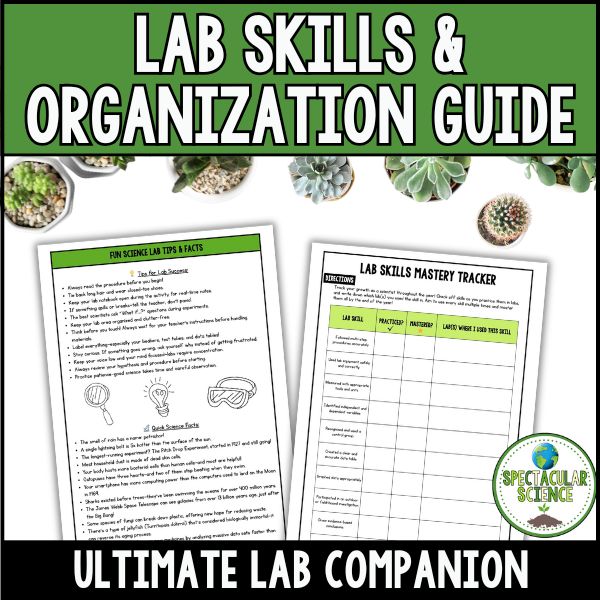
⭐️⭐️⭐️⭐️⭐️ Stephanie D. says, “I love how this makes teaching students so much easier when it comes to showing them how to write lab reports.”
2. Offer Tiered Makeup Options
Not every missed lab needs a full redo, but the alternatives should still hold students accountable to the same learning objectives. I usually give students three options, depending on the lab and the student:
- Designated Makeup Day – I set one or two makeup days within a short window (usually 2 – 3 days after the original lab). Students who missed the lab attend that session. This keeps makeups predictable and prevents a constant trickle of individual redo sessions.
- Rigorous Lab Packet / Simulation – A version of the lab that doesn’t require all the physical materials but still demands the same level of thinking, data analysis, and interpretation. Think digital simulations, interactive PDFs, or virtual lab tools. It’s not “easier,” just structured differently so students can complete it independently.
- Challenging Alternative Assignment – A research, reflection, or data analysis task aligned with the lab’s learning objectives. Students still wrestle with predictions, analyzing results, and drawing conclusions—just without the hands-on setup.
Key: The makeup options should never feel easier than the lab itself. Otherwise, students may see missing a lab as “low effort, high reward.”

3. Communicate Expectations Clearly
Students should know before the lab what happens if they miss it:
- There’s one makeup window.
- Makeup work is just as rigorous as the lab.
- Students should notify me ahead of time if they know they’ll be absent.
Consistency keeps things fair, reduces confusion, and prevents students from slipping through the cracks.
4. Streamline Materials
Missed labs often turn into a materials headache. Here’s what helps:
- Prep “Makeup Kits” for labs that are commonly missed. Include everything needed for 1 – 3 students, labeled and ready.
- Track materials with your subject-specific guide—for Earth Science, use the Earth Science Labs & Materials Guide, for Environmental Science, use the Environmental Science Labs & Materials Guide, and for Biology use the Biology Science Labs and Materials Guide. This keeps your materials inventory clear and prevents scrambling.
- For simulations or packets, use digital tools that mimic lab concepts, such as PhET Interactive Simulations for physics, chemistry, and Earth science. These allow students to explore concepts virtually when they can’t attend the makeup day.



5. Track and Reflect
Keep a simple spreadsheet or chart of lab attendance and make-up work. At the end of the week or unit, reflect:
- Are students completing makeup labs on time?
- Which strategies worked best for engagement?
- Are certain labs consistently missed, and can you adjust scheduling or format next year?
This turns a logistical headache into actionable insight for improving your lab program over time.
Putting It All Together
Missed labs don’t have to mean chaos. With week-ahead communication, clear makeup policies, and a few organizational tools, you can keep labs running smoothly—while still giving students the learning experience they deserve.
If you try one of these strategies, I’d love to hear how it goes—especially which options your students gravitate toward and how cooperative they are during makeup sessions. Those stories always make my day!