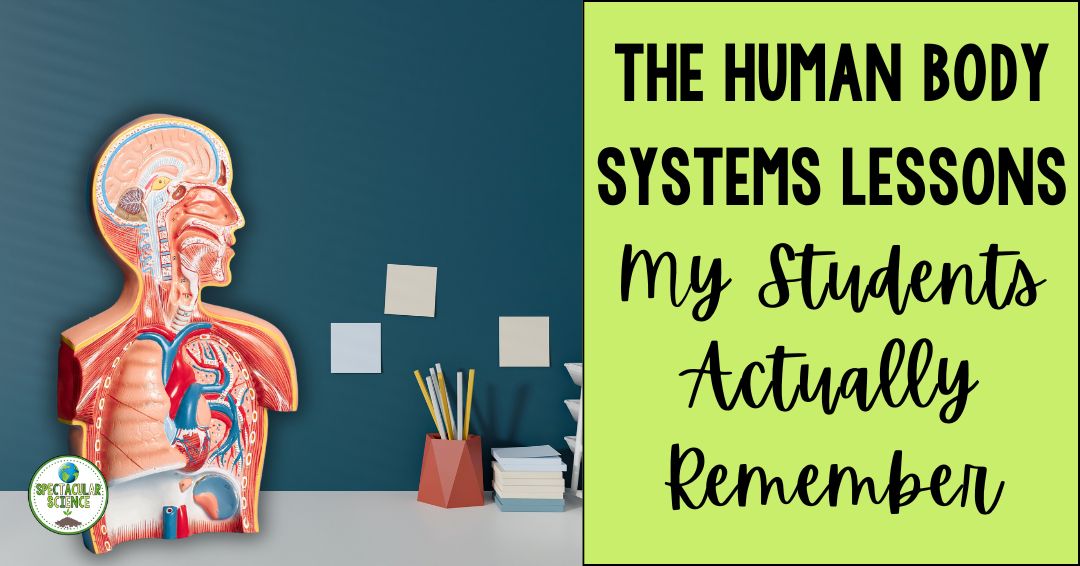





Every year, without fail, my students come into our human body systems unit thinking one of two things:
- “I already know this… I have a body.”
- “There’s no way I’m going to remember all of these systems.”
And honestly? I get it.
The human body is complex. It’s layered. Everything connects to everything else. And if we teach it as a list of vocabulary words and diagrams to memorize, it stays abstract—fast.
But when students see, measure, model, and experience what their bodies are doing in real time? That’s when it clicks.
This unit isn’t about cramming information. It’s about helping students understand how their bodies keep them alive, balanced, and moving every single day—and why no system works alone.
Here’s how I structure the unit, and the labs that consistently make the biggest impact.
Starting Big: “How Did You Survive This Morning?”
Before we name a single system, we zoom out.
The unit opens with a pre-assessment that asks students to reflect on their morning routine—getting out of bed, eating breakfast, walking to school—and predict what internal processes made those actions possible.
No notes. No pressure. Just thinking.
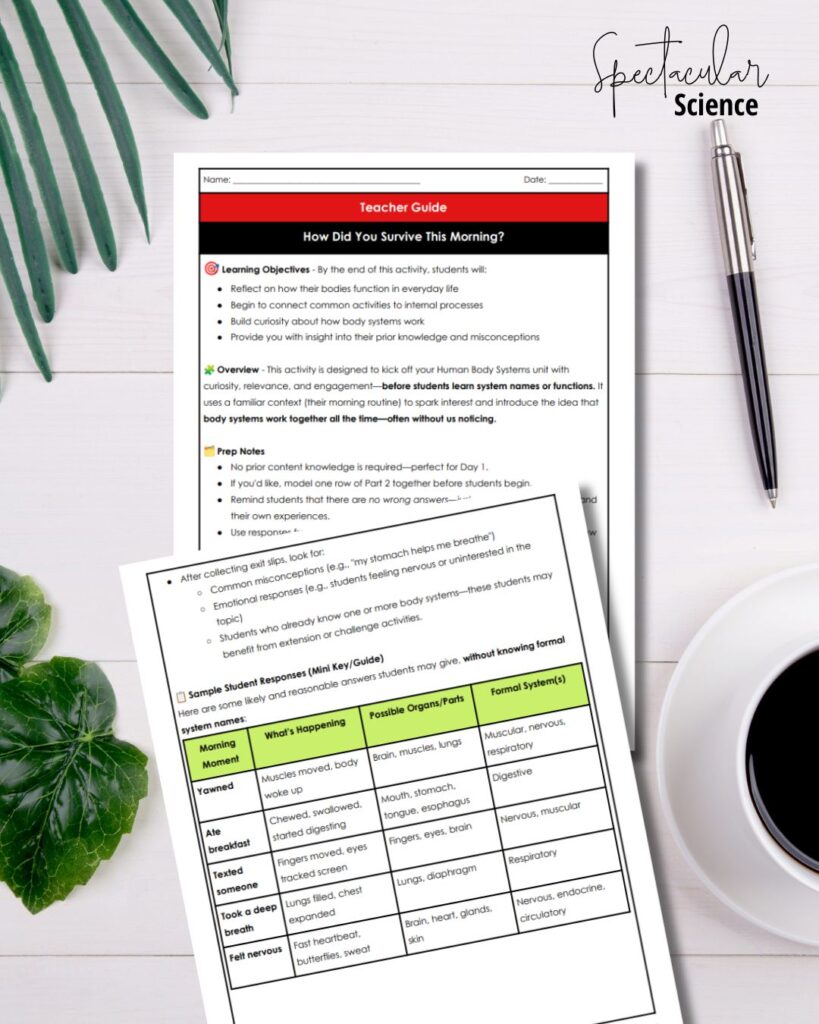
This does two important things:
- It reveals misconceptions immediately
- It reframes the unit as relevant, not theoretical
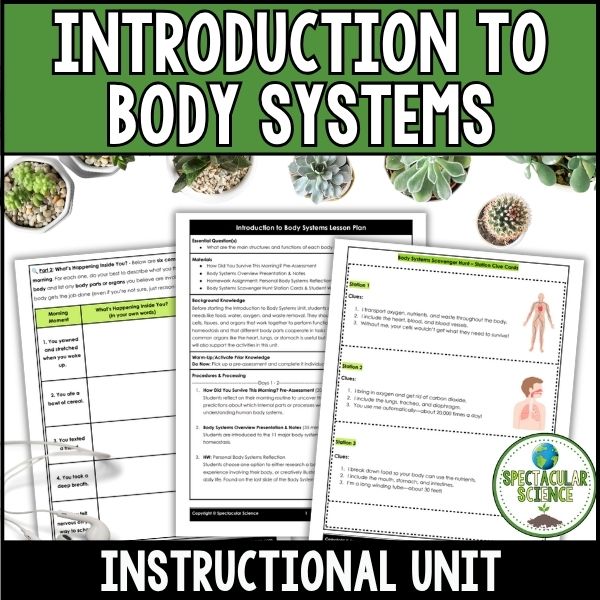
From there, we move into a Body Systems Overview and a Scavenger Hunt, where students physically move through stations to connect systems, organs, and functions. This sets the foundation for everything that follows and directly supports NGSS expectations around systems thinking.
The Circulatory & Respiratory Systems: When Students See Feedback in Real Time
If I had to name the first big “aha” moment of the unit, it would be the Pulse Rate & Activity Lab.
Students record their pulse at rest, after activity, and during recovery—and suddenly, homeostasis isn’t just a word. It’s something they can feel.
They see:
- Heart rate increase
- Breathing change
- Recovery happen
And they realize: Oh… my body is constantly adjusting.
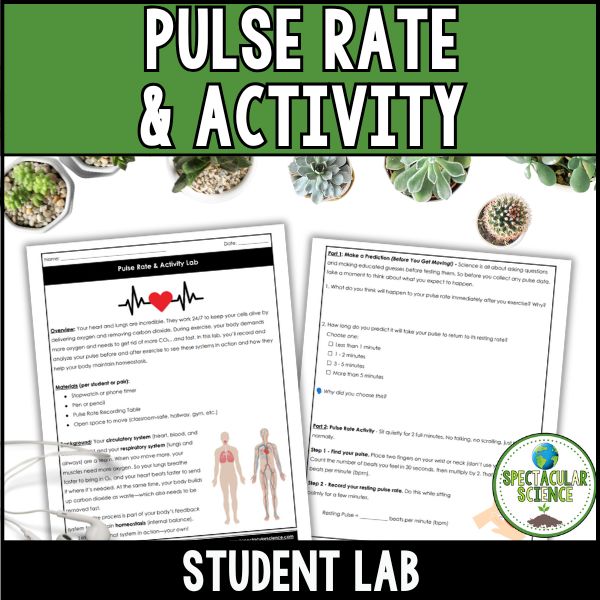
Pairing this lab with an Athlete’s Body Case Study pushes their thinking even further. Students analyze what’s happening before, during, and after intense activity, which naturally leads to conversations about oxygen delivery, cellular respiration, and system interactions.
This is where the circulatory and respiratory systems stop being separate chapters and start acting like teammates.
Digestive System Labs: From “Gross” to “Ohhh… That Makes Sense”
The digestive system is one students think they understand—until they try to explain what enzymes actually do.
That’s where modeling matters.
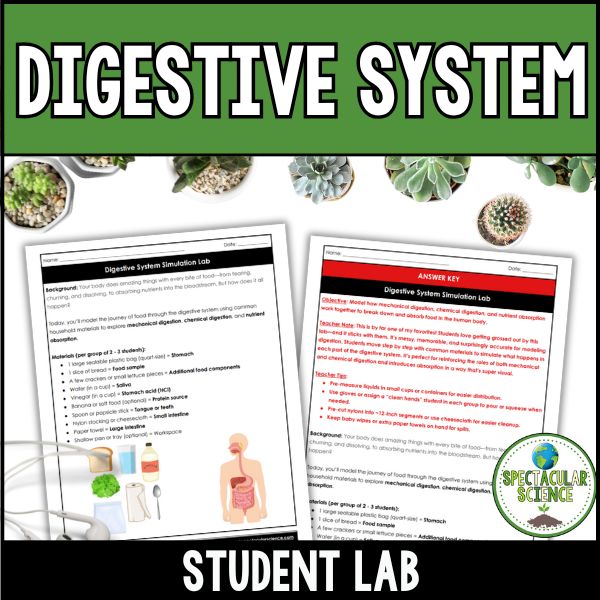
The Digestive System Simulation Lab is a turning point. Using simple materials, students model digestion and absorption step-by-step. They trace food from first bite to final exit and connect organs, enzymes, and functions along the way.
What I love most about this lab?
- It slows the process down
- It makes invisible steps visible
- It reinforces cause-and-effect thinking
By the time students reach the quiz, they’re no longer guessing. They’re reasoning.
The Nervous System: Reaction Time Changes Everything
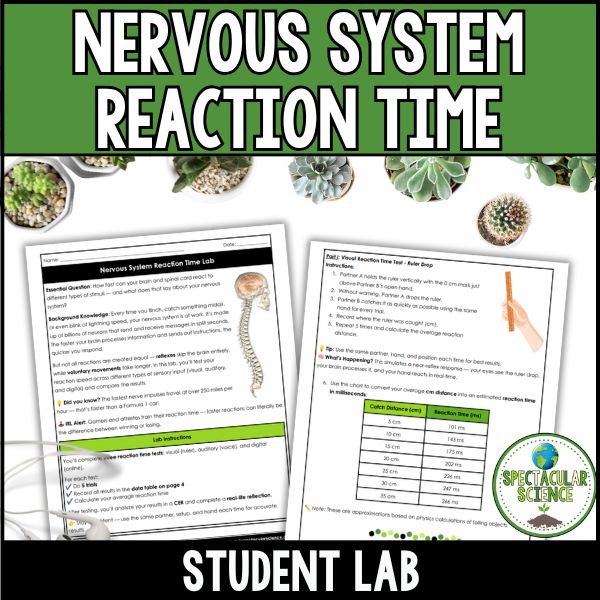
If there’s one lab students talk about long after the unit ends, it’s the Reaction Time Lab.
Measuring how quickly their brain and spinal cord respond to stimuli transforms abstract pathways into lived experience. Students aren’t just learning about neurons—they’re watching signals travel in real time.
This lab pairs beautifully with:
- Scenario-based analysis (like touching a hot pan)
- A Neural Pathways Choice Board Project, which gives students creative control
- Real-world discussions on concussions and brain health
This is where science meets real life in a powerful way—and where students begin to understand just how vulnerable (and incredible) their nervous system is.
Skin & Hormones: The Systems Students Don’t Expect to Love
The integumentary and endocrine systems are often underestimated—but they end up being student favorites.
Why? Because the labs and case studies feel personal.
Students analyze:
- Skin as the body’s first line of defense
- Skincare trends through a science lens
- Hormones and feedback loops tied to real-life scenarios
The Hormone Target Match Activity and Case Studies make endocrine regulation concrete, not confusing. Students start to see hormones as messengers with specific jobs—not random chemicals floating around the body.
And once again, homeostasis becomes the thread tying everything together.
Skeletal & Muscular Systems: Where Everything Comes Together
By the time we reach skeletal and muscular systems, students are ready to think big.
Through:
- Case study carousels
- Movement-based scenarios
- Cross-system analysis
They explore how bones, muscles, nerves, and blood supply work together to create movement and maintain balance.
This is where students truly begin to think like scientists—evaluating evidence, connecting systems, and explaining why something happens, not just what happens.
The Project Students Beg to Do
If there’s one activity in this unit that students talk about long after we’ve moved on, it’s the Create-a-Superhero (or Villain) Project.
This is where creativity and science finally meet—and where students show just how deeply they understand human body systems.
Students design a superhero or villain whose powers are based on an exaggerated human body system. But this isn’t just an art project. Students must:
- Explain how the body system normally functions
- Describe how that system is enhanced into a superpower
- Create a backstory, appearance, and—yes—realistic weaknesses
- Justify their ideas using accurate science
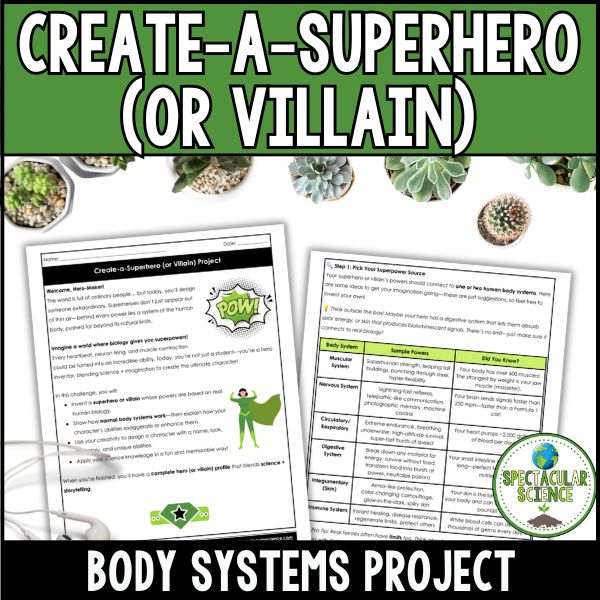
What I love most about this project is that it naturally demands higher-level thinking. Students can’t just list facts—they have to apply, analyze, and defend their choices. Weaknesses, in particular, push them to think about limitations, trade-offs, and homeostasis in a way that feels meaningful.
It also works beautifully as a differentiation tool. Students can lean into art, writing, storytelling, or scientific explanation while still being held to the same content expectations.
By the end, students aren’t just reviewing systems—they’re synthesizing everything they’ve learned about how the human body works together. And they’re having fun doing it.
Which, honestly, is the best kind of assessment.
Why These Lessons Work
Every lab and activity in this unit is designed with one goal in mind:
Make the body make sense.
That means:
- Modeling before memorizing
- Measuring before defining
- Connecting before assessing
The pacing allows students to revisit homeostasis, feedback mechanisms, and system interactions again and again—until those ideas feel natural.
A Final Thought
If you’re reading this and thinking, “Yes… this is exactly how I want to teach the human body,” I’ve got good news.
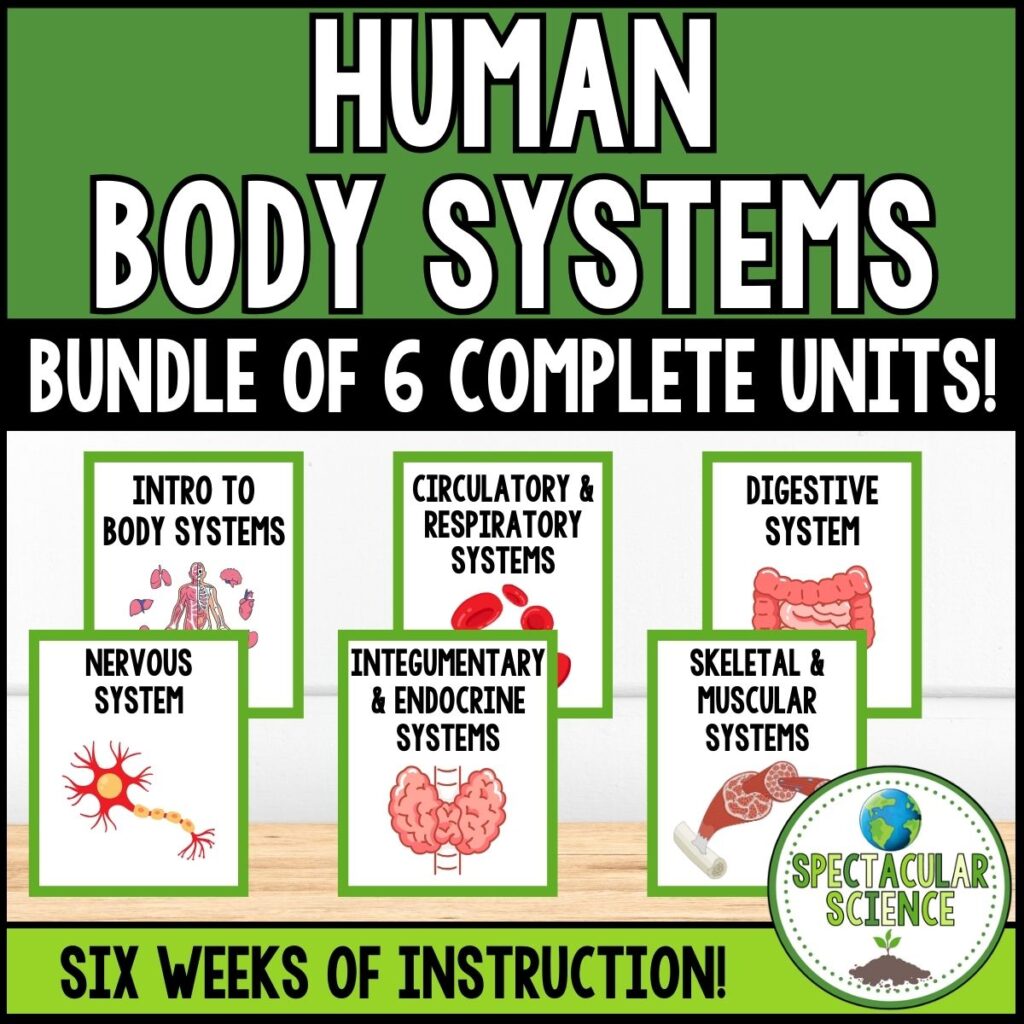
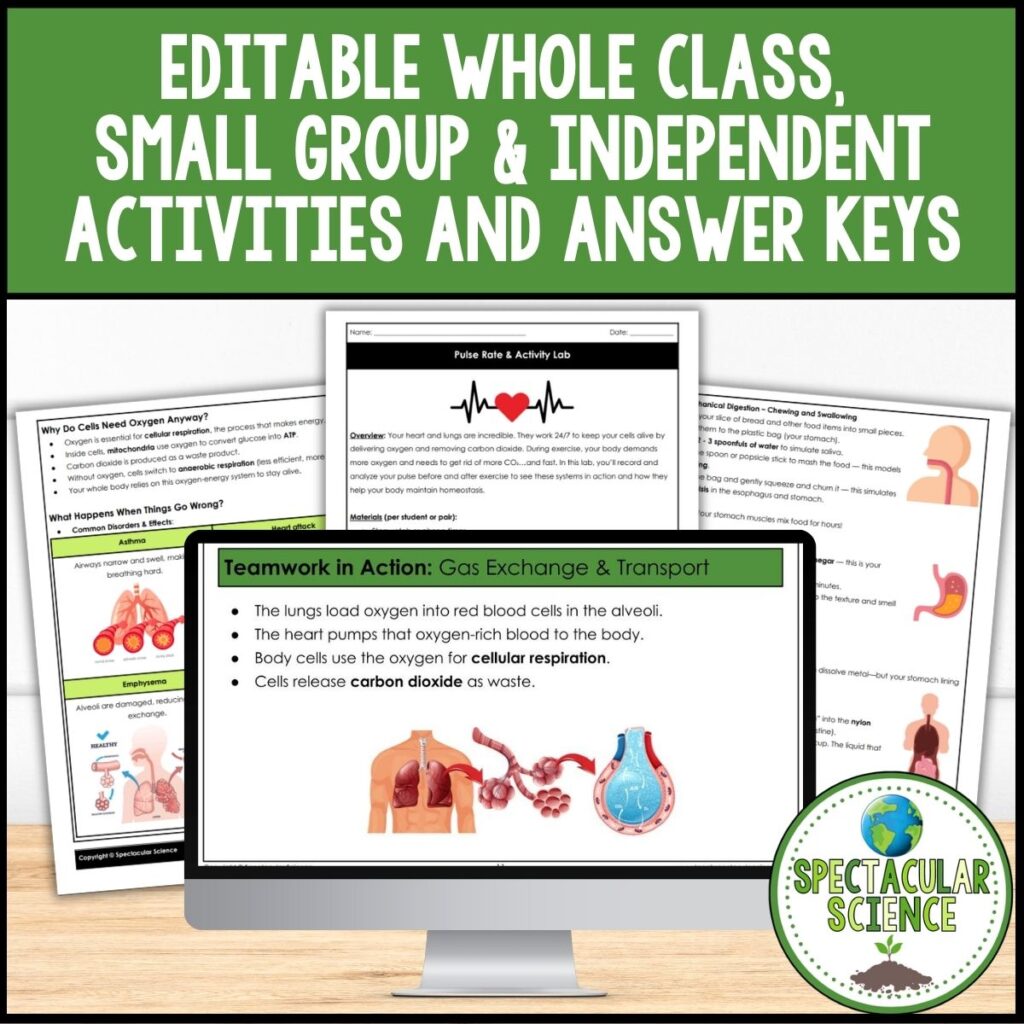
Every lab, activity, case study, quiz, and project mentioned in this post is part of my complete Human Body Systems Unit—fully planned, classroom-tested, and designed to help students truly understand how their bodies work together.
This unit includes:
- A clear, flexible pacing guide
- Hands-on labs that make abstract systems tangible
- Case studies and real-world connections students actually care about
- Built-in differentiation and choice
- NGSS-aligned assessments with multiple versions
- Activities that emphasize systems thinking and homeostasis throughout
It’s structured to save you time and mental energy while keeping students engaged, curious, and thinking deeply about science—not just memorizing terms for a test.

If you’re ready for a human body systems unit that flows smoothly, builds understanding step by step, and just works in real classrooms, this one is ready for you.
Because when the human body finally clicks for students?
That’s a win you feel all year long. 💛