What Makes This Lab Different
Instead of simply learning about Earth’s spheres, students:
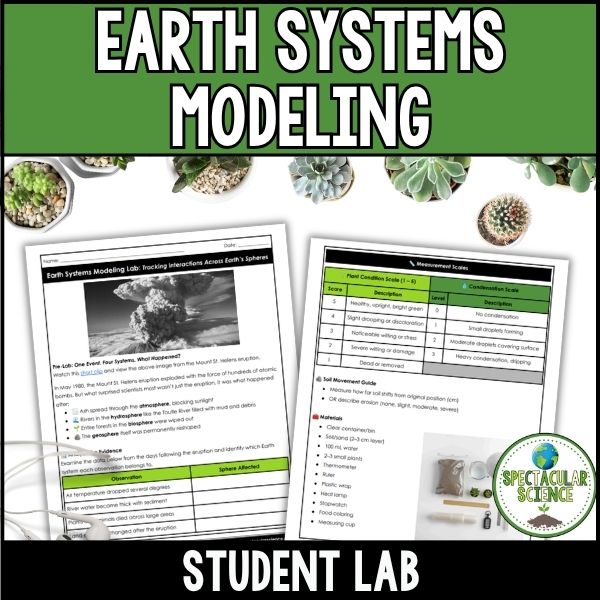
- Build and test a working Earth system model
- Collect real quantitative and qualitative data over time
- Introduce a controlled environmental disturbance
- Analyze how changes propagate across multiple systems
- Compare their results to real-world data from the Mount St. Helens eruption
This is not a worksheet-style lab. It is a data-driven modeling investigation that mirrors how real Earth scientists study system interactions.
What’s Included
- Student-Facing Lab (structured for independent success)
- Full Investigation with baseline + post-disturbance data collection
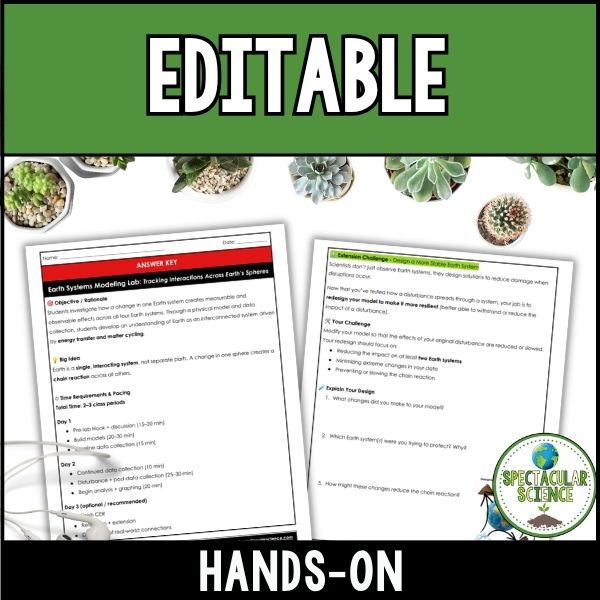
- Editable data tables and measurement scales
- Graphing task
- Calculate Change section (math + interpretation)
- CER writing task with scaffolded support
- Real-world Earth systems data comparison
- Extension Challenge (engineering redesign thinking task)
- Teacher Guide + Answer Key
NGSS Alignment
Aligned to middle and high school Earth science standards:
- MS-ESS2-1
- MS-ESS2-4
- HS-ESS2-2
- HS-ESS2-6
- Science & Engineering Practices:
- Developing and using models
- Analyzing and interpreting data
- Constructing explanations
- Crosscutting Concepts:
- Systems and system models
- Cause and effect
- Energy and matter flows
Key Skills Students Build
Students will strengthen their ability to:
- Identify interactions between Earth systems
- Analyze data trends before and after a disturbance
- Quantify change using real calculations
- Construct evidence-based CER responses
- Connect classroom models to real-world Earth events
Why Teachers Love It
- Highly engaging, phenomenon-driven hook
- Minimal prep, maximum student thinking
- Strong data collection and graphing practice
- Clear structure with built-in scaffolds
- Perfect for NGSS observations or evaluation lessons
- Encourages real scientific reasoning, not just completion
Perfect For
- Earth Science Units
- Systems & Interactions Lessons
- NGSS Performance Tasks
- Sub plans (with structure provided)
- End-of-unit investigations
- STEM / inquiry-based classrooms
Make Earth Science Click
Students don’t just learn about Earth systems—they see how they interact in real time. This lab helps them move from memorizing spheres to understanding Earth as a dynamic, interconnected system.
Grade Levels: 8th – 12th
Total Pages: 23
Teaching Duration: 3 Days
If you have any questions, please do not hesitate to ask.
Thanks for visiting!
Jessica