




I used to teach science last period on Fridays. By the end of the week, students were already checked out—ready for the weekend—and honestly, so was I! One day, we were teaching about how to measure the angle of Polaris using the horizon, and I noticed most students were staring at the ceiling, doodling, or quietly tapping on their desks. That’s when it hit me: let’s get up and move our bodies!
We kept it light—just reaching out both arms and stretching toward the horizon, then pointing our arms up toward Polaris. Students laughed, shook off the Friday fatigue, and surprisingly, they stayed focused enough to make the connection to the star’s angle. That small, simple movement was all it took to re-engage the class and spark curiosity.
At first, there wasn’t much buy-in. A few students rolled their eyes, some whispered, and I heard a “really, we’re doing yoga now?” But here’s the trick: keep it short, relatable, and connected to the science content. Within a few weeks, students began asking if we could “do a pose” before tests or even as a transition between topics. What started as a last-resort engagement tool turned into a classroom staple.
When I introduced other poses—like the Rainforest Canopy Stretch to visualize biodiversity, or the Constellation Stretch to connect with the night sky—students loved the chance to pause, breathe, and physically embody science concepts. They weren’t just learning; they were experiencing science.

Why Mindfulness Matters (Especially in Adolescence)
Beyond promoting physical health, mindful movement nurtures cognitive, emotional, and social well-being. Studies have shown the positive ties between physical activity and brain health (read more here from the National Institutes of Health). Physical activity can affect the plasticity and growth of the brain which can enhance comprehension and retention.
Mindfulness isn’t just a “nice-to-have.” Especially in adolescence, students face stress—from grades to social pressures—which directly affects learning. Integrating mindful movement helps students:
- Reset focus before tests or challenging content
- Reduce anxiety and improve emotional regulation
- Enhance retention through multi-sensory engagement
- Develop self-awareness and resilience
One Friday, before a quiz, we did Microscopic Warrior. By the end, students were calmer, more focused, and joking about how strong their “immune systems” felt. Mindfulness doesn’t just calm the room—it makes learning stick.
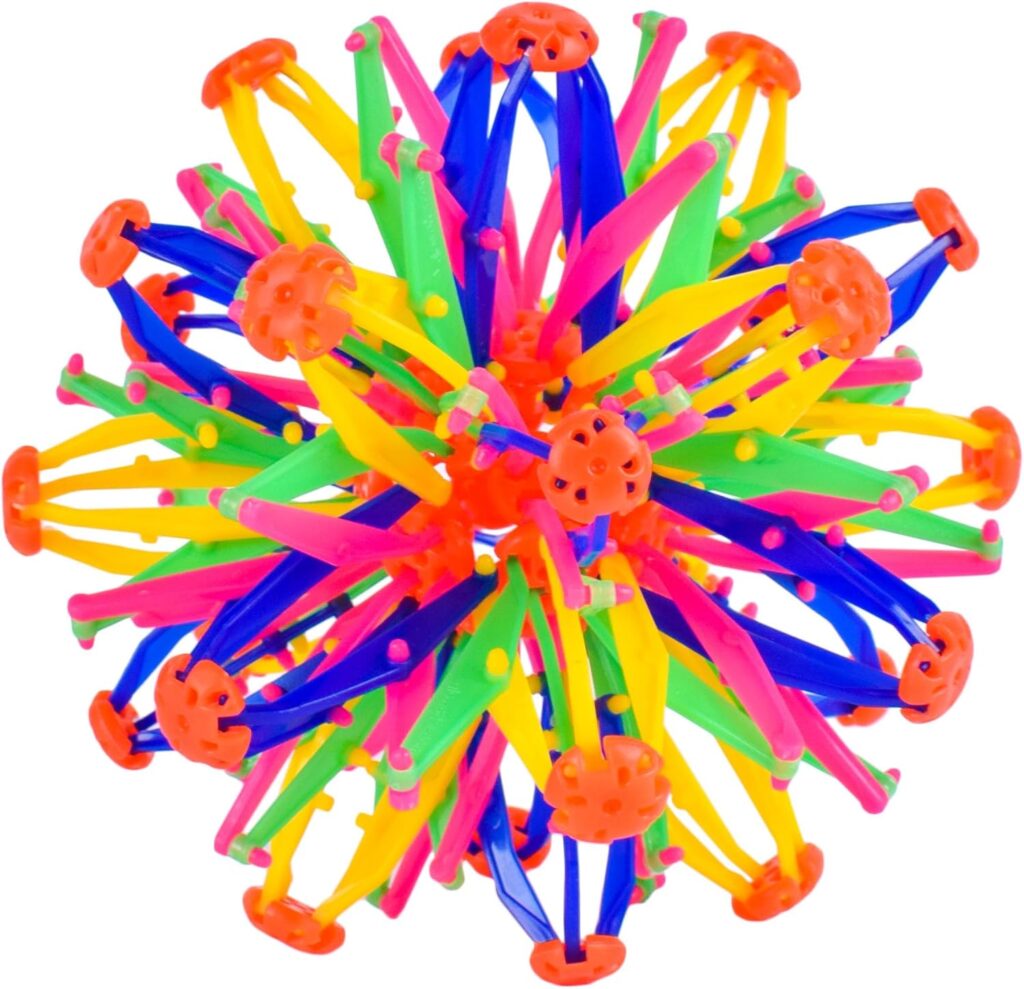
Teacher Tip: Keep an expandable breathing sphere handy in your classroom. Students watch it expand as they inhale and contract as they exhale—a simple, visual way to reset attention and bring calm before tests or transitions.
How Mindful Science Works
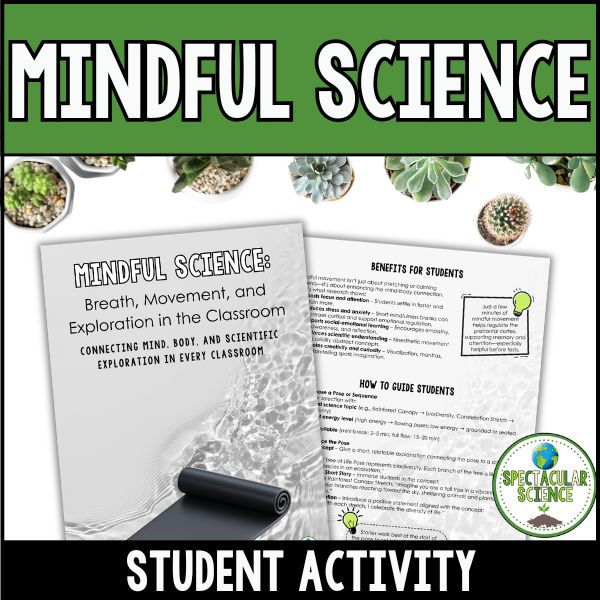
Mindful Science: Breath, Movement, and Exploration in the Classroom combines movement, mindfulness, and scientific exploration. Students embody scientific concepts, connect them to breath and intention, and reflect afterward. Here’s how I guide it in class:
- Choose a Pose or Sequence – Align with lesson content, student energy, or time available.
- Introduce the Pose – Short, relatable science connection.
- Guide the Movement – Cue posture, breath, and intention.
- Reflection & Journaling – Students share insights verbally or in journals.
- Add Stories or Mantras – Reinforce mindfulness while connecting to science.
During an ecology unit, the Rainforest Canopy Stretch led one student to whisper, “I can almost see the layers of the forest.” That imaginative connection was proof that mindfulness brings science to life.
Updated Mindful Science Features
The resource has been completely revamped to include:
- 50 poses spanning physics, biology, chemistry, astronomy, earth and environmental science
- Mantras supporting SEL and focus
- Short stories that immerse students in scientific concepts
- Teacher tips for mindfulness before tests, transitions, or high-stress content
- Stronger science + SEL connections
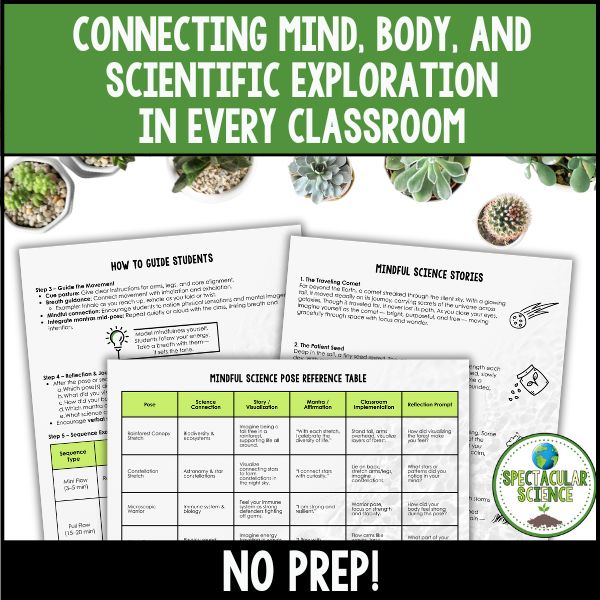
Sample Poses:
| Pose | Science Connection | Classroom Implementation |
|---|---|---|
| Rainforest Canopy Stretch | Biodiversity & ecosystems | Stand tall, arms overhead. Guide students to breathe and visualize forest layers. |
| Constellation Stretch | Astronomy & star constellations | Lie on backs, stretch limbs. Visualize connecting stars. |
| Microscopic Warrior | Immune system & biology | Warrior pose. Cue strength in “immune system.” |
| Wave Pose | Physics: sound waves | Flow arms like waves. Discuss energy transfer. |
| Eco Footprint Balance | Sustainability | Balance on one leg. Prompt reflection on personal choices. |
…and 45 more to mix and match depending on lesson and classroom energy.
Short Stories & Mantras
Short stories and mantras help students step into mindfulness while reinforcing science.
Example Short Story:
The River of Knowledge
A river winds through a hidden valley, carrying whispers of wisdom from ancient trees. Students imagine sitting by the riverbank, absorbing knowledge like water flowing into their minds. Breathing slowly, they feel curiosity and understanding grow.
Example Mantra:
“With every stretch, I connect my mind, body, and the world around me.”
Teacher Tip: You don’t need to be a yoga expert—model curiosity and try the poses alongside your students. It’s a lesson in life-long learning and growth.
And if you’ve never taken a yoga class, rest assured that this collection of resources is tailored to educators of all levels. It provides insights and practical tips for a smooth integration process into your science class. No one needs to be an expert in yoga to include this mindful practice into their science class. Instead, you might consider it an opportunity to demonstrate your own journey of life-long learning to your students!
For more about life-long learning, check out this post about an innovative teaching strategy to demonstrate that teachers don’t and don’t need to have all of the answers.

Tips for Implementation
- Mini-breaks: 1–3 minutes to reset students before tests or transitions.
- Full sequences: 10–15 minutes to explore a topic in depth and foster focus.
- Cross-curricular connections: Link poses to SEL, environmental awareness, or creativity.
- Home connection: Share poses or mantras with families for practice outside the classroom.
Why I Love Mindful Science
It’s not just about movement—it’s about bringing science to life while supporting student well-being. Breath, motion, imagination, and reflection transform your classroom into a space where learning and mindfulness coexist.
One particularly rough Friday, we did Solar Flare, Plate Tectonics Twist, and Constellation Stretch. Students were laughing, focusing, and talking about science concepts like never before. Learning thrives when students feel calm, connected, and engaged.
Ready to Bring Mindfulness to Your Science Classroom?
If you already own this resource, re-download for the updated version with 50 poses, new stories, mantras, and teacher tips. For new teachers, Mindful Science: Breath, Movement, and Exploration in the Classroom fits seamlessly into your curriculum—whether you have 3 minutes or 30.
Bring curiosity, calm, and connection into your classroom—and watch your students thrive as scientists, thinkers, and mindful learners.
RELATED POSTS:
- USING REFLECTION TO BUILD STRONG TEACHER-STUDENT RELATIONSHIPS
- ONE SIMPLE WAY TO BUILD AN INCLUSIVE CLASSROOM COMMUNITY
- 7 INNOVATIVE CLASSROOM ACTIVITIES TO KEEP SECONDARY STUDENTS IN SCIENCE