If your science bell ringers feel like they’re falling flat, you’re not alone.
You put them up every day. Students answer them (sometimes). But the energy in the room doesn’t really change. It still takes 10–15 minutes to “warm up” their thinking, and by then your lesson has already lost momentum.
The problem usually isn’t effort—it’s the type of question being used.
Most traditional bell ringers focus on vocabulary review, isolated skills, or quick recall. But NGSS science classrooms aren’t built around memorization anymore. They’re built around phenomena, curiosity, and explanation of real-world events.
And that changes everything.
The Real Problem: Bell Ringers Without Curiosity
A typical science bell ringer might look like:
- Define photosynthesis
- Label layers of the atmosphere
- Review Newton’s laws
- Identify parts of a cell
These aren’t wrong—but they don’t create curiosity.
They don’t make students lean in and ask:
- “Wait… why does that happen?”
- “I’ve seen that before!”
- “That doesn’t make sense—explain it.”
Without that moment of curiosity, students stay in “school answer mode” instead of “scientist thinking mode.”
And that’s where engagement starts to break down.
What NGSS Actually Requires at the Start of a Lesson
NGSS isn’t just about what students learn—it’s about how they begin learning it.
Three-dimensional learning starts with:
- Phenomena (something observable or relatable)
- Questions (student-generated curiosity)
- Sense-making (figuring out explanations over time)
That means the best lesson opener isn’t a question they already know the answer to…
It’s something they don’t fully understand yet.
The Shift That Changes Everything: From Bell Ringers → Phenomenon Hooks
Instead of starting class with review questions, imagine starting with this:
Biology
- Why do some bacteria survive antibiotics while others die?
- Why do siblings with the same parents look completely different?
- How can identical genetic information lead to different traits in different environments?
Earth Science
- Why do some hurricanes rapidly intensify over warm ocean water while others weaken?
- Why do earthquakes happen in clusters along certain fault zones?
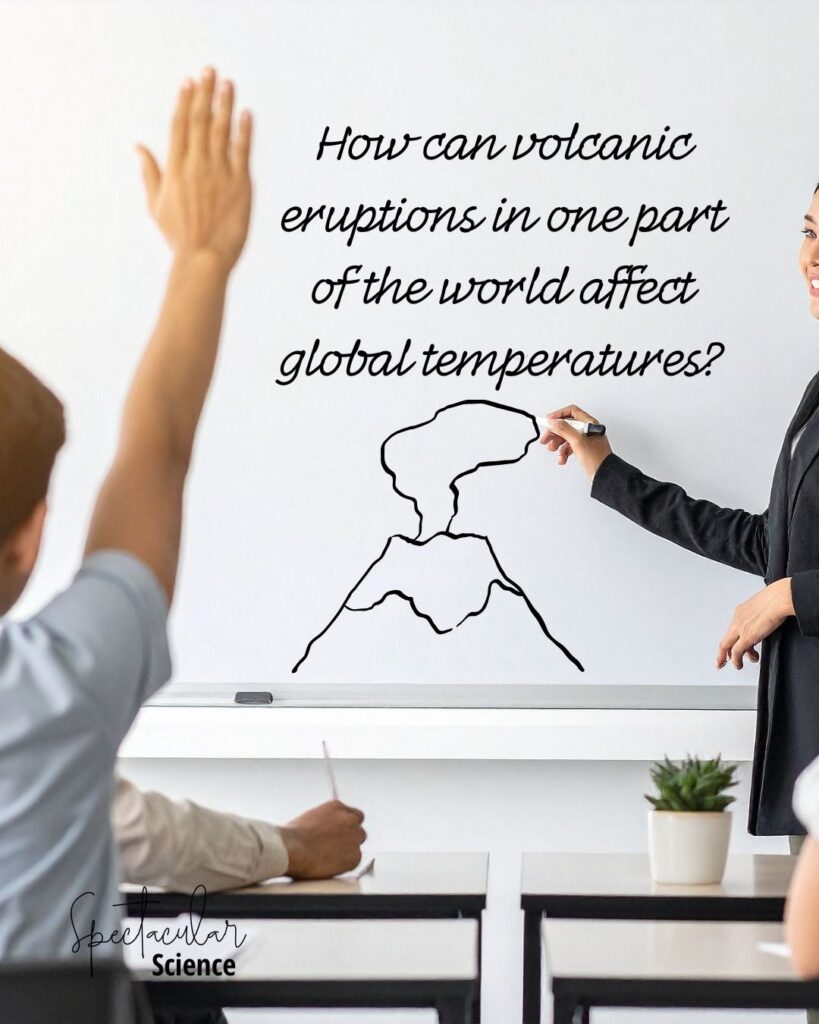
- How can volcanic eruptions in one part of the world affect global temperatures?
Environmental Science
- Why do invasive species spread so quickly when introduced to new ecosystems?
- Why do some regions experience extreme drought while others face flooding in the same year?
- How does deforestation in one area impact weather and biodiversity far away?
Suddenly, students aren’t just answering—they’re thinking, discussing, and questioning.
That’s the shift from a bell ringer to a phenomenon hook.
Want to Try a Few in Your Classroom?
I put together a free sampler with five phenomenon hooks across Earth Science, Environmental Science, and Biology. Each one includes a student prompt and teacher notes, so you can see how I take a curious question and turn it into a lesson opener.
Grab the 5 free science phenomenon hooks.

What a Phenomenon Hook Does Differently
A strong NGSS phenomenon hook:
✔ Starts with a real-world observation
✔ Sparks curiosity immediately
✔ Encourages student discussion (not silent work)
✔ Leads naturally into your lesson content
✔ Connects directly to NGSS standards
✔ Builds toward explanation, not memorization
Instead of telling students what they’ll learn, you’re showing them something that makes them want to learn it.
Example: Same Topic, Two Different Starts
Traditional Bell Ringer:
Define natural selection.
Phenomenon Hook:
Why do some insects survive pesticides while others die?
Now compare what happens next:
- The first leads to recall
- The second leads to curiosity, debate, and prediction
One is an answer.
The other is a question that needs solving.
Why This Works (Especially for Middle and High School)
Students are naturally wired to notice:
- conflict
- surprise
- patterns that don’t make sense
Phenomena tap into all three.
When students see something that challenges their expectations, they don’t wait for instruction—they start trying to figure it out immediately.
That’s the exact mindset NGSS is designed to build.
The Easy Way to Make the Switch
The hardest part of using phenomena consistently is not understanding them—it’s having them ready to go every day.
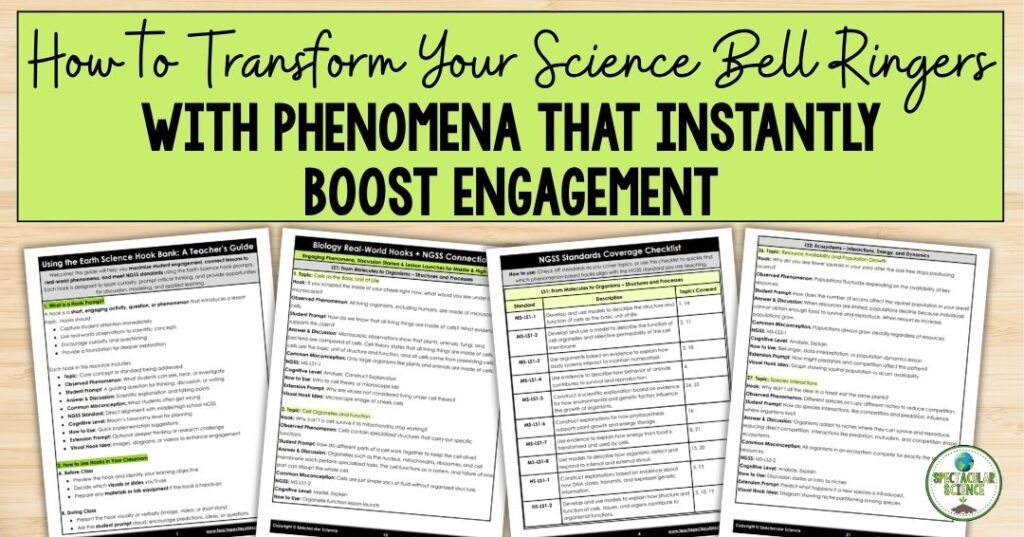
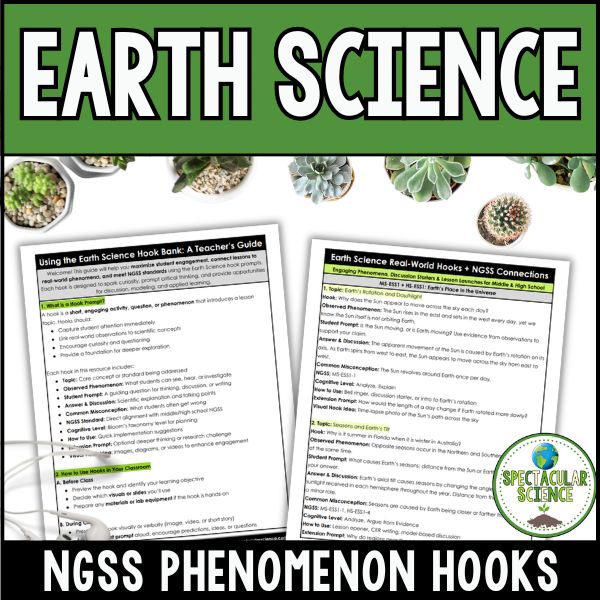
That’s why I created complete Real-World Biology and Earth and Space Science Hook Banks.
Each hook includes:
- A real-world phenomenon
- A student-facing prompt
- Answer & discussion notes
- Common misconceptions
- NGSS alignment
- Cognitive level (Bloom’s Taxonomy)
- Extension questions
- Visual ideas for slides
- Teacher usage suggestions
So instead of planning a new engagement strategy every day, you just open, project, and start the conversation.
Not sure if phenomenon hooks would work for your students? Start with the free five-hook sampler. Try one question at the beginning of a lesson, then revisit students’ first explanations once they’ve explored the science.
The Big Idea
If your students aren’t engaged at the start of class, the issue usually isn’t the content.
It’s the entry point.
Because once curiosity is activated, everything else becomes easier:
- classroom discussion improves
- questioning becomes deeper
- explanations become more meaningful
- students actually care about the answer
And that’s the goal of NGSS instruction—not just coverage, but understanding.
Ready-to-Use NGSS Hook Banks
If you want to transform your lesson starts without adding prep time, you can explore the full collections here:

Each one is designed to help you launch every lesson with curiosity instead of compliance.
Final Thought
Students don’t disengage because science is boring.
They disengage when they don’t see the reason to care yet.
Phenomenon hooks fix that in the first 30 seconds of class.
And once that curiosity is there… everything else gets easier.
RELATED POSTS:
- When Students Don’t Care About Science…How to Spark Engagement That Actually Works
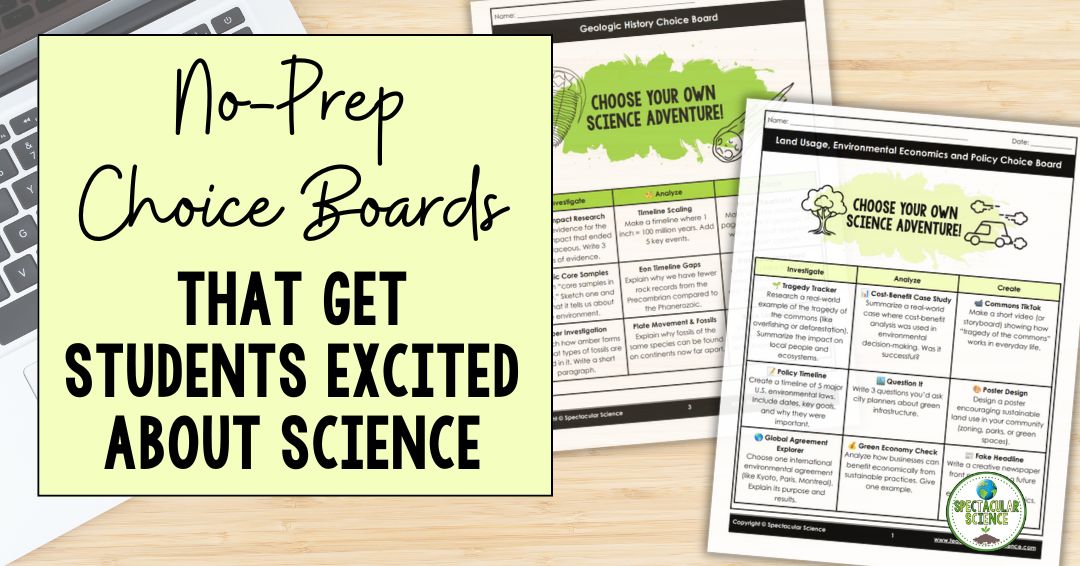
- No-Prep Choice Boards That Get Students Excited About Science
- New Teaching Approaches for Middle and High School Teachers