




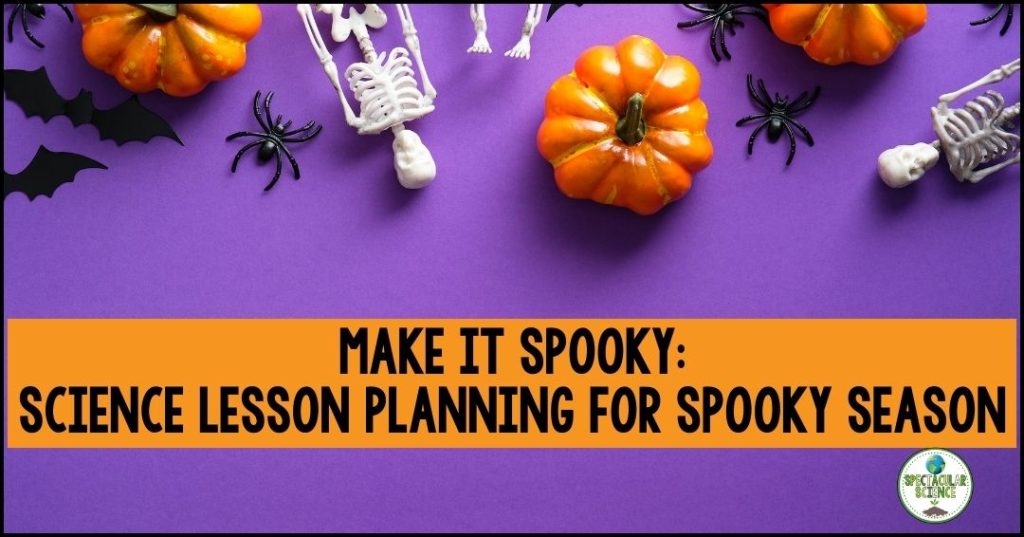
Let’s be real: sometimes your lesson plans could use a little extra oomph. And October is the perfect time to bring in themed activities that get students excited without losing any of the science rigor. That’s where spooky season meets science.
Yes, Halloween and hands-on science are a match made in the lab. From creepy critters to glowing minerals, there are tons of ways to teach science while sprinkling in a little spooky fun. And the best part? You don’t have to sacrifice learning for the theme.
Here’s a lineup of 11 spooky science ideas you can use this October—or anytime you want to add a little seasonal flair.

1. Creepy Crawlers and Ecosystems
Topics Covered: Ecology, Decomposers, Nutrient Cycling, Ecosystems
Spiders in the classroom = chaos? Perfect. Channel that energy into a lesson on decomposers and scavengers. Explore how spiders, worms, and vultures help recycle nutrients and keep ecosystems running.
Students can make models of decomposer-driven ecosystems using craft materials. Work in groups, present to the class, or go full-on mini science fair. Bonus: it’s hands-on, collaborative, and gets students thinking about the unseen heroes of nature. You can also connect this to local ecosystems, asking students to research decomposers in their own backyard or schoolyard, which makes the lesson even more relevant.
2. Geology of Haunted Landscapes
Topics Covered: Geology, Erosion, Weathering, Volcanic Activity, Critical Thinking
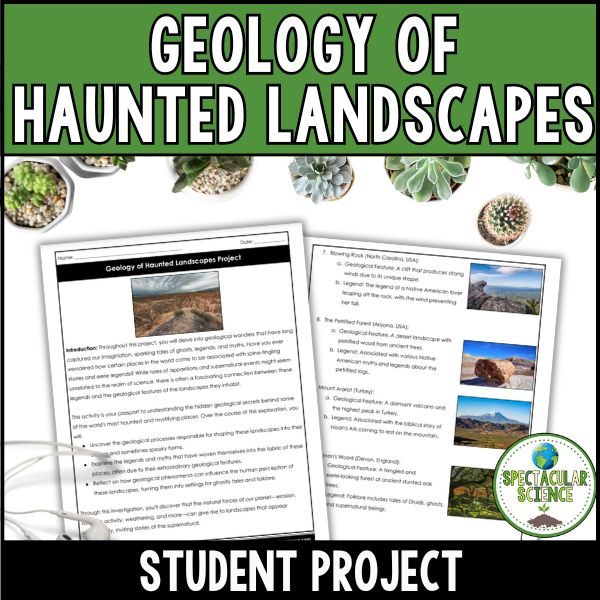
Eerie landscapes aren’t just for ghost stories—they’re science gold. Teach students about erosion, weathering, and volcanic activity using formations that look downright spooky.
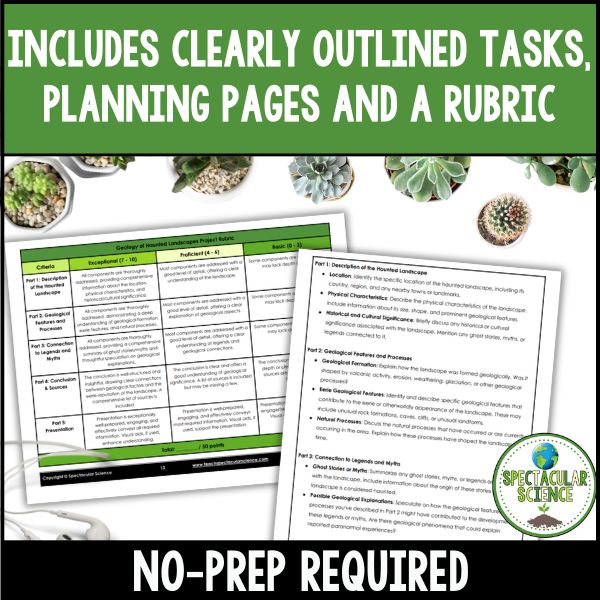
Then, let them investigate their own “haunted landscapes” with a no-prep research project. They’ll sharpen critical thinking, research, and presentation skills. Plus, a detailed rubric makes grading easy for you.
Here’s another extension: have students create their own spooky landscape models using clay, sand, or digital tools, and present the “haunted” backstory of their terrain.
3. Pumpkin Science
Topics Covered: Photosynthesis, Plant Growth, Environmental Science, Experimental Design
Pumpkins aren’t just for carving—they’re perfect for teaching plant science. Explore photosynthesis, growth, and environmental factors.
Students can hypothesize how weather, soil, or sunlight affects pumpkin growth. If you have the space, track small gourds over a few weeks to see real results. Observing and recording data? That’s science with a seasonal twist.
You could even extend this into a math connection, having students graph growth rates or compare results between different classroom conditions, which adds another layer of learning.
4. Glow-in-the-Dark Minerals
Topics Covered: Chemistry, Mineralogy, Luminescence
Take your students from normal rocks to glowing, UV-activated fun. Fluorite and other luminescent minerals are perfect for teaching about luminescence.
For a deeper dive, discuss real-world applications like how scientists use luminescence to track mineral compositions or detect radiation, giving students a practical reason why glow isn’t just for fun.
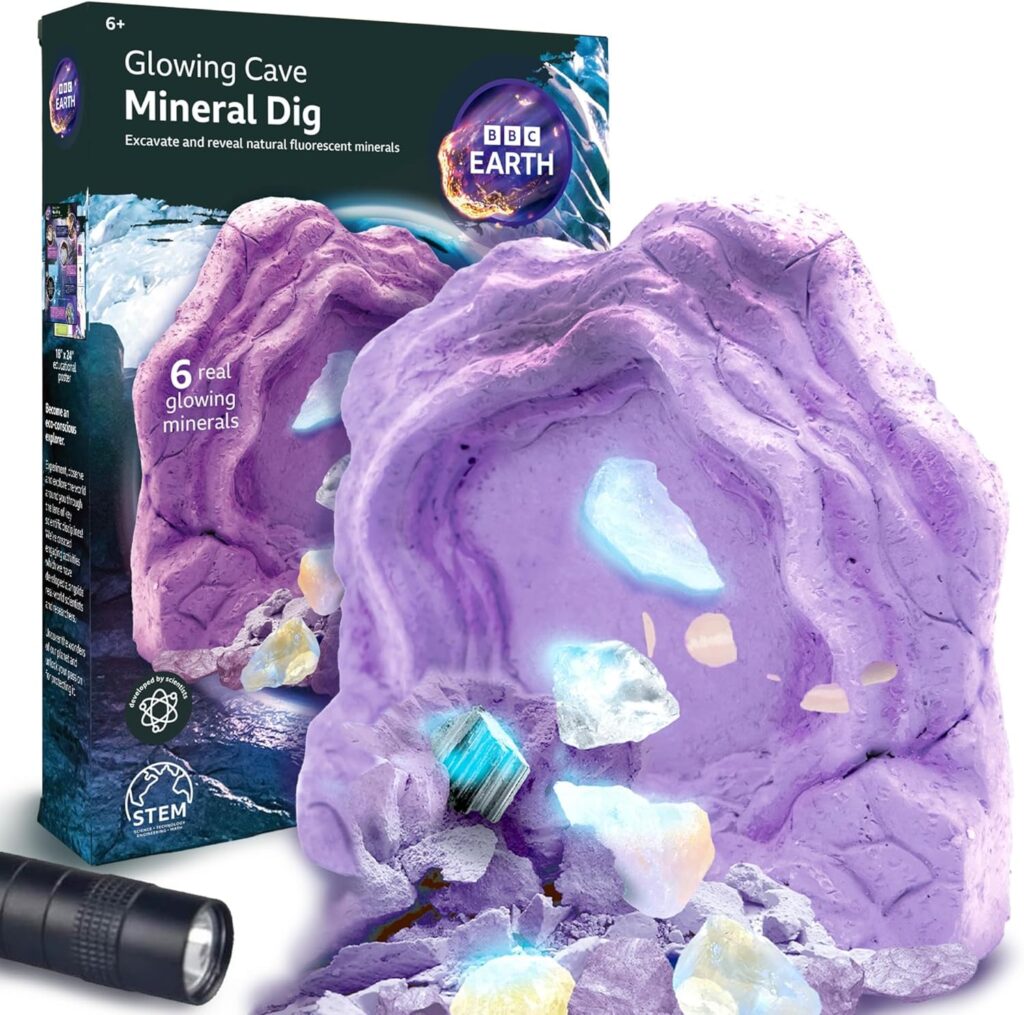
Fun Buy: Become a mineral detective and uncover real citrine, black tourmaline, crystal quartz, and other fluorescent minerals with this Mineral Dig Kit! It’s a perfect way to combine hands-on learning, creativity, and a little spooky-season sparkle.
5. Mystery Fossils
Topics Covered: Paleontology, Evolution, Observation, Hypothesis Formation
Turn gross-out moments into learning gold. Give students “mystery fossils” (think weirdly shaped or creepy-looking) and have them deduce what prehistoric creature they came from.
Start with a think-pair-share to brainstorm questions, then let students analyze and present findings. Bonus: it’s a subtle lesson in paleontology, critical thinking, and a little Halloween fun. To add challenge, you can include fossils from lesser-known species or have students create a “fossil field guide” with sketches and facts about each specimen.
Fun twist: Make it a game! Place the mystery fossils in a black bag and have students guess whether each one is real or fake. This adds excitement, engages their sense of touch and observation, and sparks lively discussion.
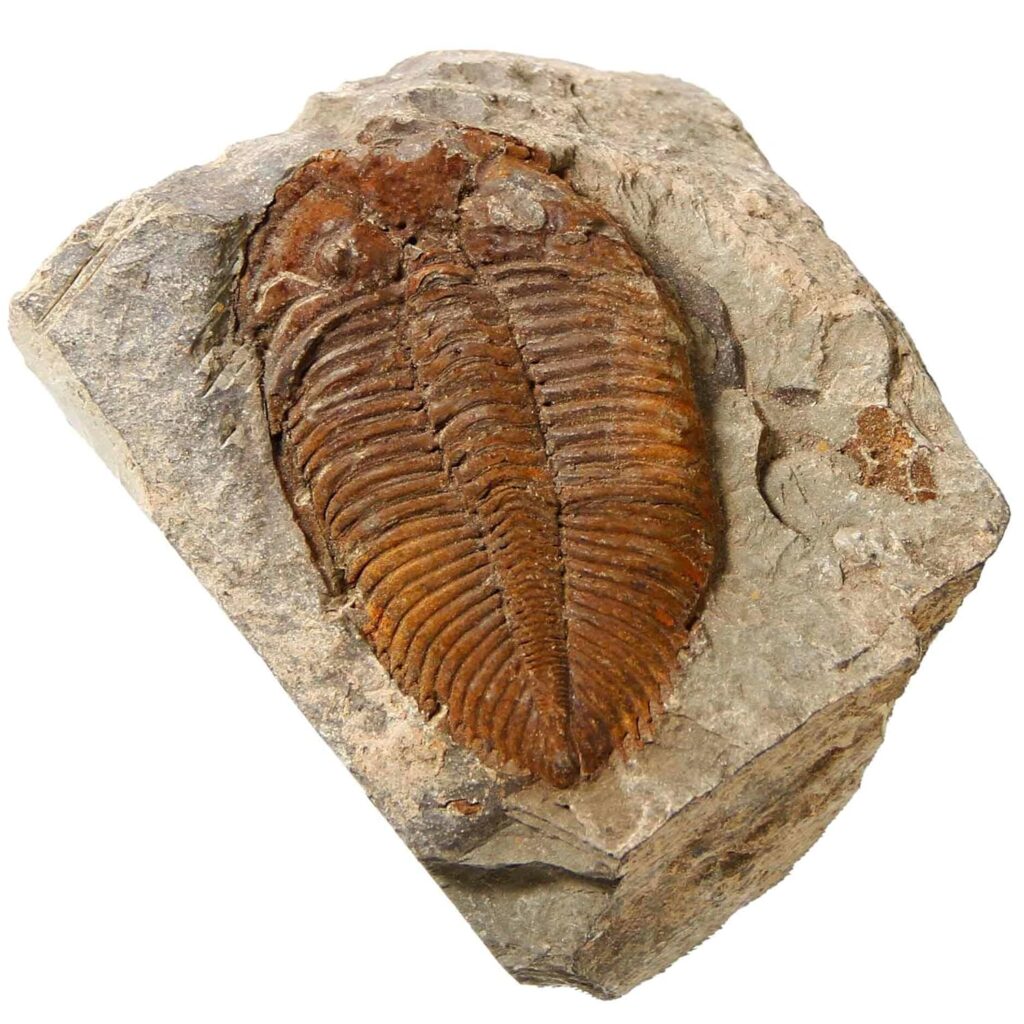
For a ready-to-go option, you can grab a real Trilobite Fossil on Amazon—perfect for adding authenticity to the activity and letting students handle a piece of prehistoric history.
6. Zombie Geology
Topics Covered: Earth Science, Plate Tectonics, Geologic Activity
Ancient landscapes come back to life—just like zombies. Show how tectonic activity, earthquakes, and other geological processes can “revive” old formations.
Students get a hands-on analogy while learning serious geology. Extend this by having students track “resurrected” landscapes on maps over time or research famous fault zones and the impact of repeated seismic activity. It’s a creepy way to make Earth science memorable.
7. Weather and Witchcraft
Topics Covered: Meteorology, History, Folklore, Critical Thinking
Storms, lightning, and odd cloud formations—once upon a time, people thought this was witchcraft. Turn that mystery into a science lesson about meteorology and folklore.
Include historical tidbits, like the Salem Witch Trials or medieval weather-wielding witches (Tempestarii). Students can explore the science while enjoying a story-rich context. Add a fun twist by having students write a short “weather legend” explaining a storm scientifically but in the style of old folklore—it’s storytelling and science rolled into one.
8. Haunted Weather Patterns
Topics Covered: Severe Weather, Safety, Meteorology
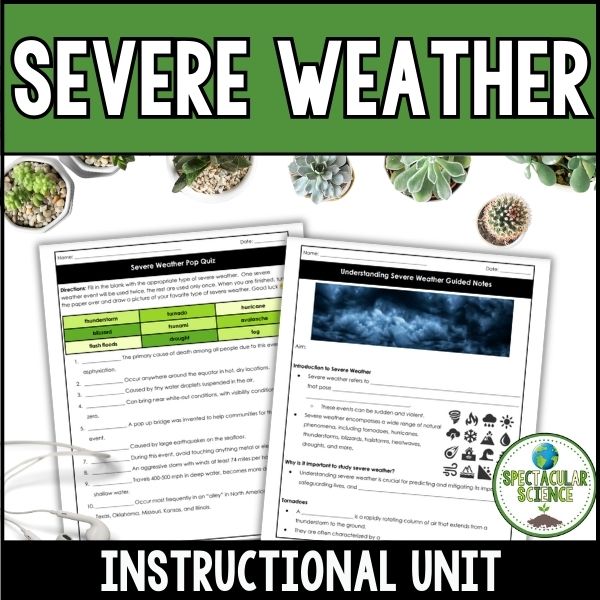
Extreme weather can feel spooky. Hurricanes, tornadoes, snowstorms—tie these into lessons about atmospheric science, meteorology, and safety.
Extend the lesson with creative projects, like weather-themed survival brochures for “Halloween emergencies.” Ready-to-go resources make this low-prep and high engagement. You could also add a data-analysis angle, asking students to track recent weather events and predict outcomes, which blends real-world skills with seasonal fun.
Whether you’re teaching extreme weather during spooky season or not, this ready-to-go resource all about severe weather will save you time and get students thinking about how scientists categorize dangerous weather!
9. Spooky Space
Topics Covered: Astronomy, Physics, Space Science
Black holes, mysterious celestial objects, and the vast unknown—space is spooky on its own.
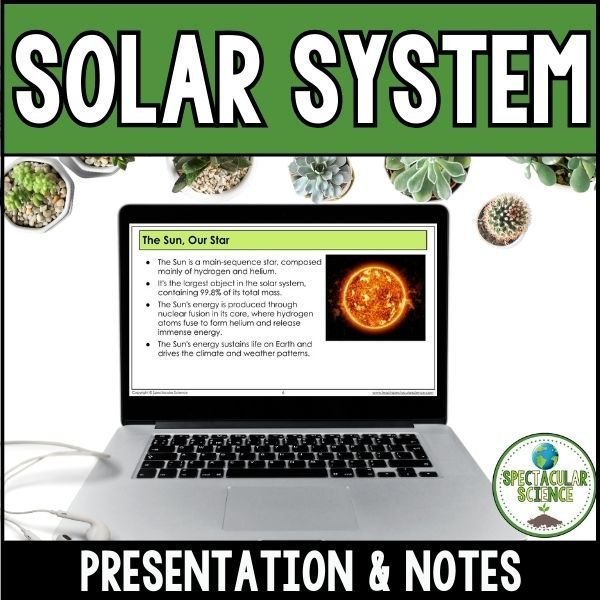
Start with a short video like “Black Holes 101” from National Geographic then dive into a solar system lesson or have students create spooky space art. Science, imagination, and seasonal fun all in one. To deepen the lesson, encourage students to compare black holes to other mysterious space phenomena, like neutron stars or comets, and discuss why these objects capture both scientific and cultural imagination.
10. Ghosts of Extinct Species
Topics Covered: Evolution, Extinction, Environmental Science
Teach extinction with flair. From saber-toothed cats to ancient sea creatures, students explore why species disappear, natural vs. human-caused extinctions, and the consequences for ecosystems.
Adding a spooky twist—creatures long gone but not forgotten—makes the lesson memorable. For engagement, students can create “extinction profiles” for each species, including cause of extinction, time period, and a creative “ghost story” that links science with storytelling.
11. Mysteries of Migration
Topics Covered: Animal Behavior, Navigation, Ecology
Bats, birds, and other seasonal travelers are perfect for teaching animal migration. Students can learn navigation, celestial cues, and Earth’s magnetic field.
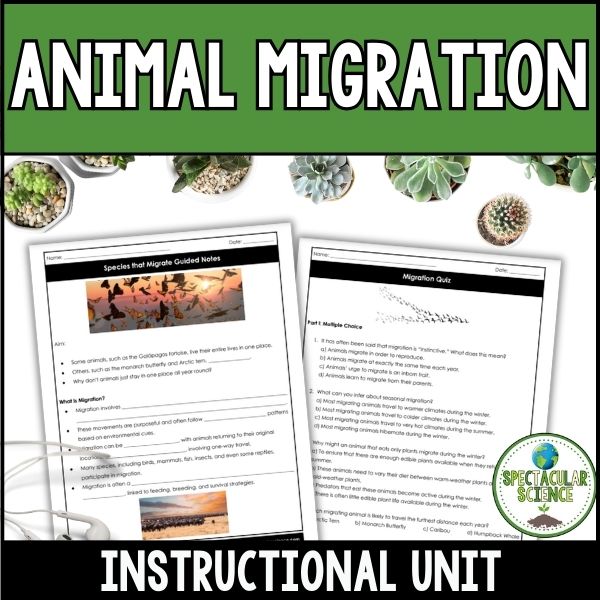
Try a jigsaw activity: each group studies a different species and reports back. Collaboration, critical thinking, and a little Halloween vibe included. To extend the lesson, have students design tracking maps showing migration paths or even simulate migration challenges, which helps them understand the science and strategies these animals use in the wild.
Interested in more resources on species migration patterns? In this low-prep unit, students research why animals migrate from one environment to another.
Final Thoughts
Spooky season doesn’t have to mean candy-only activities. Hands-on experiments, themed projects, and creative discussion can make science lessons more engaging than ever.
Even if your students don’t celebrate Halloween—or if you teach any of these lessons at another time of year—you can still use these ideas to inject drama, curiosity, and excitement into your classroom. Science + a little seasonal flair = happy, engaged learners. And the best part? These lessons are flexible enough to tweak for age, interest, or available materials, so you can make them work for your classroom every year.