




Let’s remember that the best learning experiences are often the most memorable. They transcend the boundaries of textbooks, allowing students to explore, question, and discover for themselves. These activities aren’t just about imparting knowledge; they’re about cultivating a spirit of inquiry that will last a lifetime.
As educators, we understand that time is often of the essence, and finding quick yet impactful activities is key to keeping students engaged. Whether you’re delving into Earth Science, Environmental Science, or other scientific realms, here are 100 bite-sized hands-on learning opportunities to infuse excitement into your classroom.
25 hands-on learning opportunities in earth Science
Explore the wonders of Earth science with these 25 engaging hands-on learning opportunities! From rock formations to weather patterns, these activities make learning about our planet exciting for students of all ages.
1. Simulating Plate Tectonics with Graham Crackers:
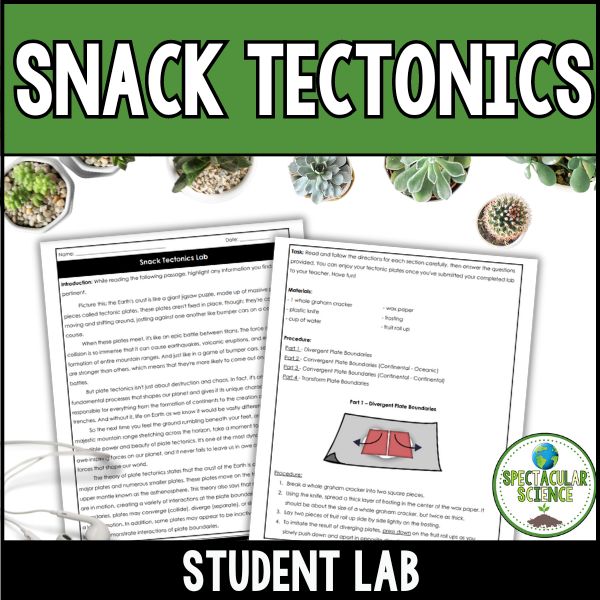
Breaking, shifting, and colliding graham cracker pieces provides a tactile experience that vividly demonstrates the dynamic forces responsible for shaping Earth’s crust. As the crackers move against each other, students can observe firsthand how tectonic plates interact, leading to the formation of mountains, earthquakes, and other geological features. Grab a done-for-you Snack Tectonics Lab here.
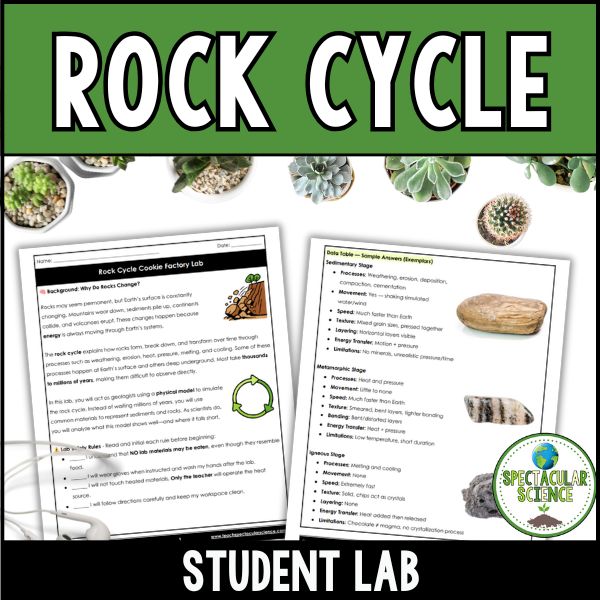
2. Modeling the Rock Cycle Using Cookies:
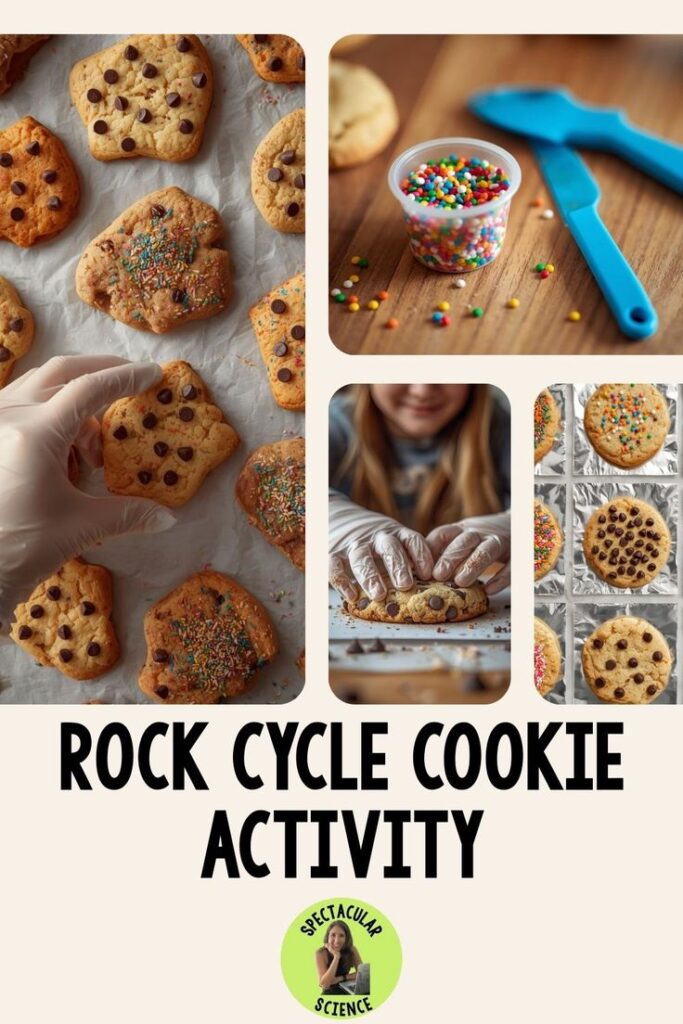
Students model the rock cycle using cookies, pressure, and heat to represent Earth’s processes. Crushing, stacking, and reshaping the cookies helps students see how rocks change over time. It is hands-on, memorable, and a student favorite.
3. Modeling the Water Cycle with Ziplock Bags:
Sealed Ziplock bags serve as miniature environments where students can witness the water cycle in action. Condensation forms on the bag’s surface, simulating clouds, which then lead to precipitation and eventual evaporation. This hands-on activity offers a visual and interactive way to comprehend the continuous natural process of water circulation.
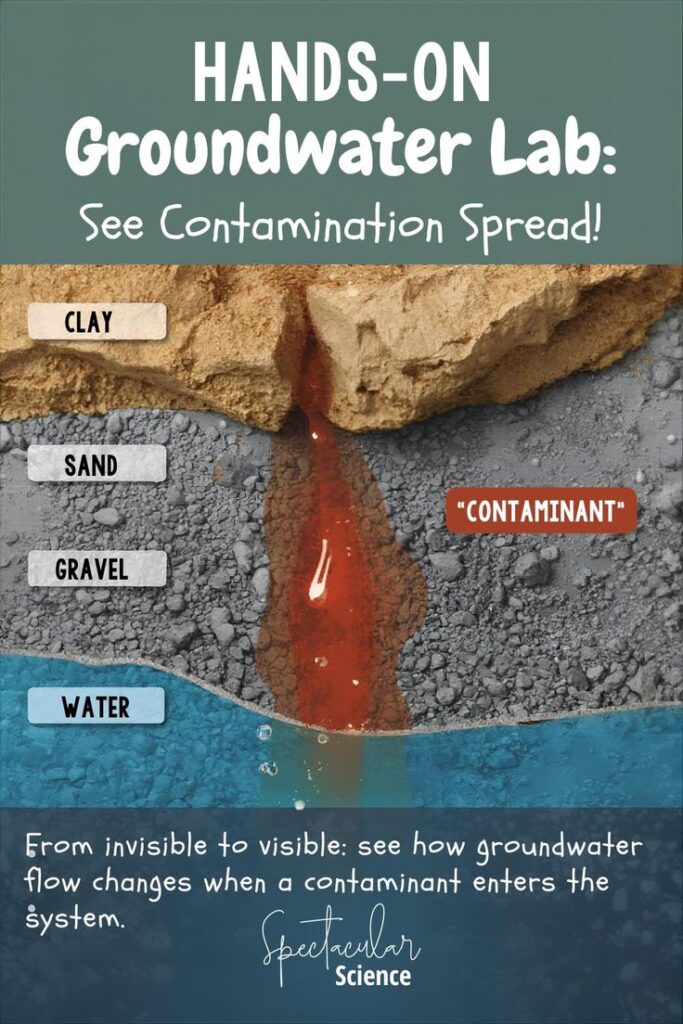
4. Tracing Groundwater Movement and Pollution Below Earth’s Surface:
Using clear containers, water, and food coloring, students model how groundwater moves beneath Earth’s surface. They watch contamination spread in real time, making an invisible process suddenly visible. This lab sparks great conversations about drinking water, pollution, and real-world consequences.
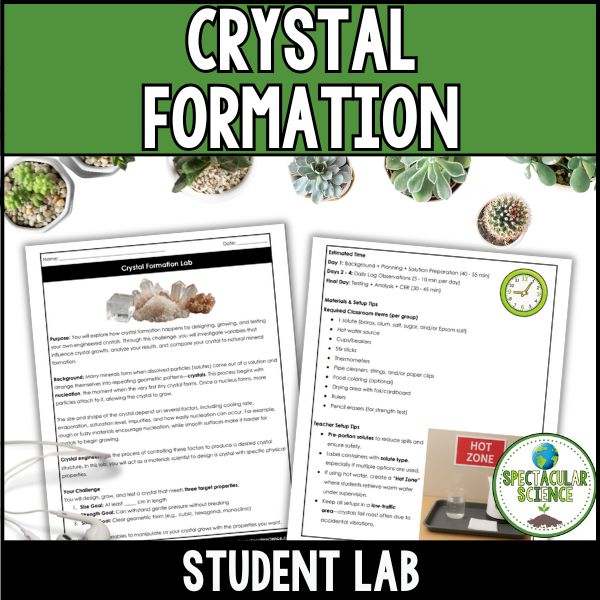
5. Investigating How Minerals and Crystals Form:
Students grow their own crystals and observe how minerals form under different conditions. Watching crystals slowly appear builds excitement while reinforcing patience and careful observation. The results are always impressive and easy to connect back to mineral properties.
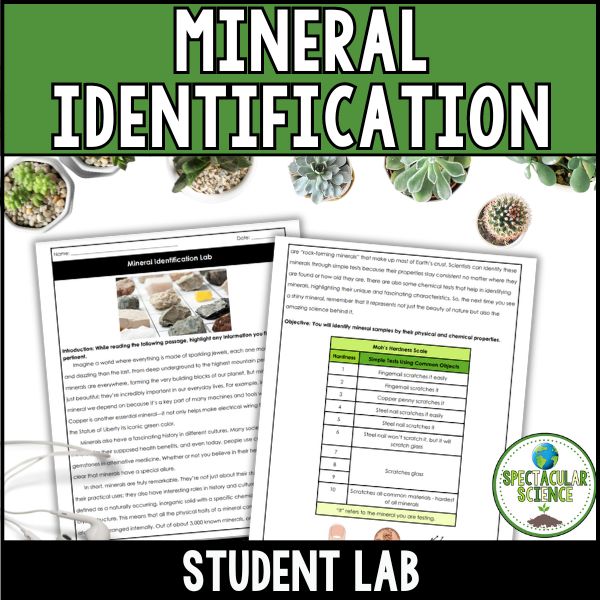
6. Exploring Mineral Properties with a Scratch Test:
Testing the hardness of minerals through a scratch test with common objects offers a hands-on approach to understanding mineral properties. By discovering the correlation between scratch resistance and mineral hardness, students gain valuable insights into mineral identification and classification. This Mineral Identification Lab will set you (and your students) up for success.
7. Designing and Testing Paper Airplane Weather Models:
Constructing paper airplanes to explore the impact of weather conditions on flight patterns engages students in meteorology. By observing how different weather factors affect the flight of their models, students develop a practical understanding of the atmospheric forces influencing aviation.
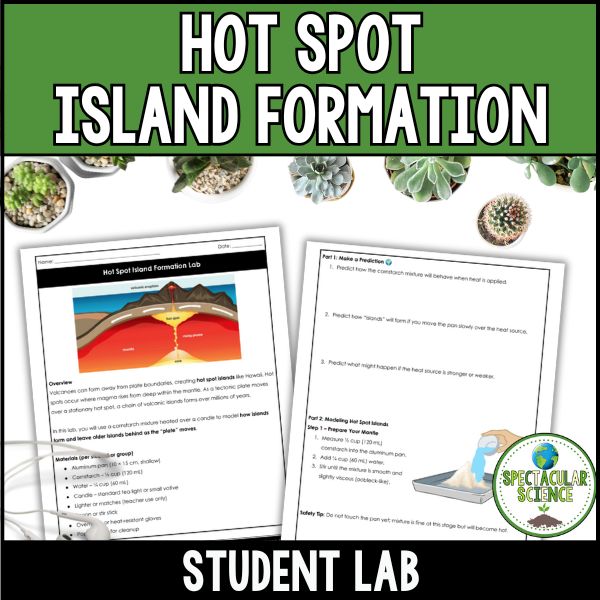
8. Modeling Volcanic Island Formation Over Hot Spots:
Students model how volcanic islands form as tectonic plates move over hot spots. Patterns emerge quickly, helping students explain island chains like Hawaii. It is a clear, visual way to reinforce plate motion.
9. Mapping Topography with Contour Lines:
Molding Play-Doh to represent different elevations and creating a tactile map with contour lines helps students grasp the concept of topography. This hands-on activity enables students to visualize landscapes and understand how contour lines convey elevation changes on maps.
Designed for middle school and high school students, this interactive lab takes geography and earth science to new heights, allowing learners to delve into the art of interpreting topographic maps with ease. From understanding contour lines to unraveling elevation changes, this lab transforms complex concepts into captivating adventures.

10. Investigating How Weather Fronts Drive Weather Changes:
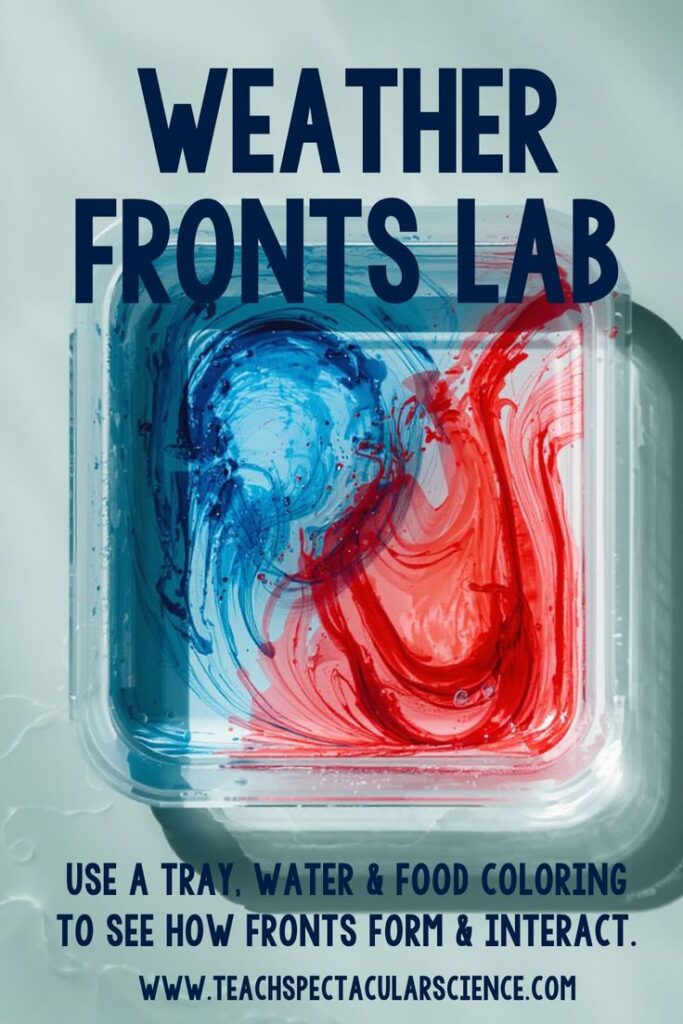
Bring weather patterns to life with this engaging, NGSS-aligned weather fronts lab! Students model cold, warm, stationary, and occluded fronts using simple materials while analyzing real movements, mixing patterns, and front interactions. Perfect for Earth science units on weather, climate, and atmospheric processes.
11. Measuring Stream Velocity and Water Flow:
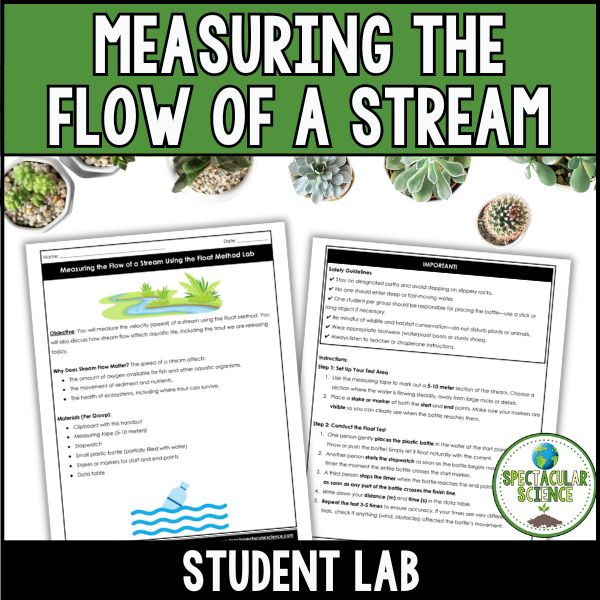
Students measure how fast water moves and calculate stream flow using simple math. It feels like real fieldwork, even when done on campus. This lab is a great blend of Earth science and data analysis.
12. Measuring Solar Altitude with Shadows and Angles:
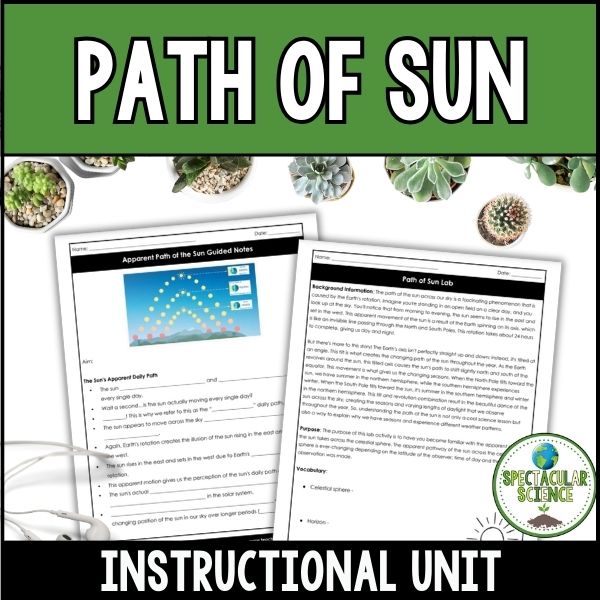
Tracking the sun’s movement by measuring shadows at different times of the day deepens students’ understanding of solar altitude. This activity allows students to appreciate the Earth’s axial tilt and its role in influencing the length and direction of shadows throughout the day.
Want more? This no-prep unit encourages students to investigate how the daily apparent path of the sun changes with each season. Students are introduced to the following concepts and terms: zenith, celestial sphere, solar noon, Tropic of Cancer, Tropic of Capricorn, solstices, equinoxes, shadows, etc.
13. Investigating Earthquake Waves with Jell-O:
Shaking up Jell-O to understand the principles of seismic waves and earthquake behavior offers a fun and interactive way to explore seismology. Students can observe how different types of waves travel through the gelatin, simulating the dynamics of earthquake propagation.
14. Exploring the Structure and Behavior of Earth’s Interior:
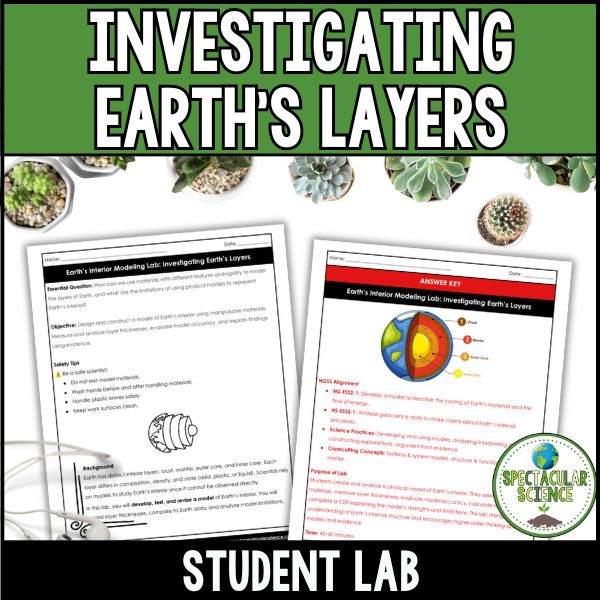
Students build a model of Earth’s interior to explore density, composition, and energy transfer. Comparing layers helps students understand what drives plate motion and volcanism. This lab makes Earth’s interior feel far less abstract.
15. Exploring the Coriolis Effect with Spinning Tops:
Spinning tops on a rotating surface allows students to witness the Coriolis effect in action. This hands-on demonstration helps students understand how the rotation of the Earth influences the trajectory of moving objects, emphasizing the impact of Earth’s rotation on global phenomena.
16. Constructing Sun Dials for Solar Time Measurement:
Building sundials provides a practical experience in measuring time based on the sun’s position. Students can observe how the sun’s shadow changes throughout the day, gaining insights into the Earth’s rotation and the concept of solar time.
17. Identifying Rocks and Minerals with a Rock Hunt:
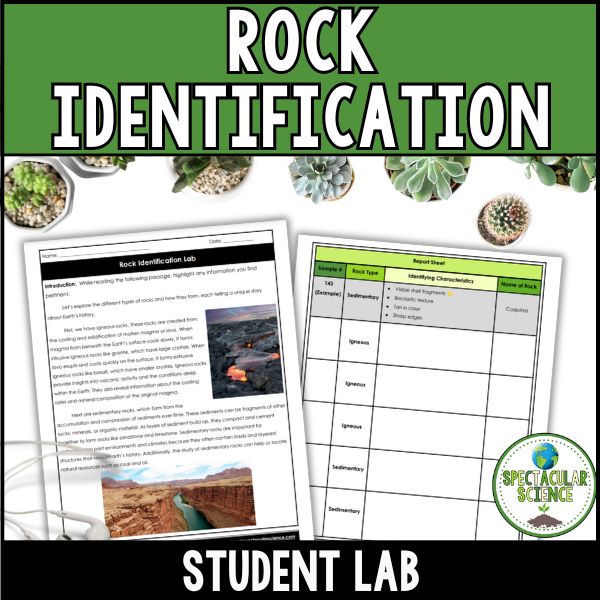
Organizing a rock hunt encourages students to apply their knowledge of rock and mineral identification in a real-world setting. By collecting and classifying specimens, students reinforce their understanding of geological diversity and learn to recognize different rock types.
Here are more structured hands-on learning activities when teaching rock identification and mineral identification.

18. Modeling the Phases of the Moon with Oreos:
Turning Oreos into a delicious representation of the moon’s phases makes astronomy both engaging and tasty. Students can visually connect the changing shapes of the cookie to the moon’s lunar phases, providing a memorable and palatable introduction to celestial observations.
19. Simulating Glacier Movement with Clay:
Molding clay to observe the flow and deformation characteristics of glaciers offers a hands-on approach to glaciology. Students can model the movement of glaciers and understand how ice dynamics shape landscapes over extended periods.
20. Predicting Climate Patterns by Designing a Continent:
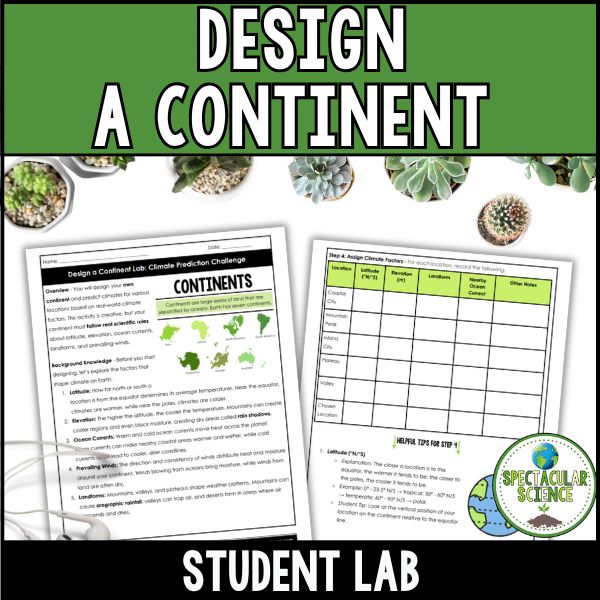
Students design their own continent and decide where mountains, oceans, and deserts belong. Then they use latitude, elevation, wind, and currents to predict climate zones. It feels like a creative challenge, but every decision must be backed by science.
21. Investigating the Properties of Convection Currents:
Observing convection currents by adding food coloring to hot and cold water engages students in fluid dynamics. This hands-on experiment helps students comprehend the movement of fluids due to temperature differences, illustrating the concept of convection.
22. Modeling How Air Pressure Influences Weather Systems:
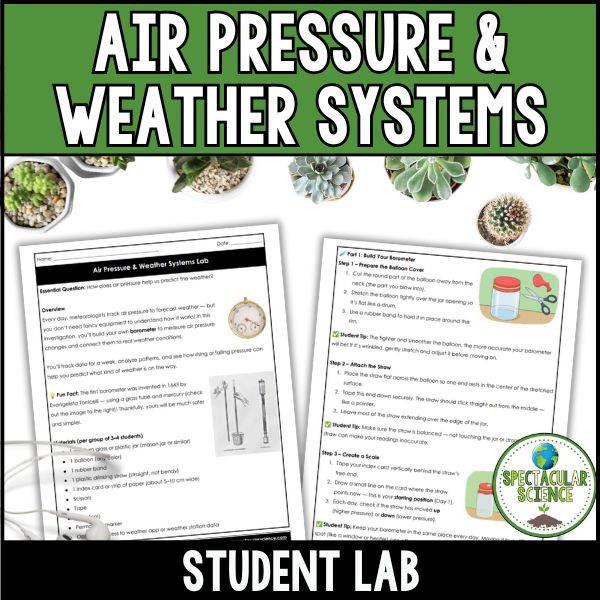
Students use simple materials to model high and low pressure systems. As pressure differences form, students see how wind and weather develop. It is a great way to connect diagrams to real atmospheric behavior.
23. Investigating How Heat Is Trapped in Earth’s Atmosphere:
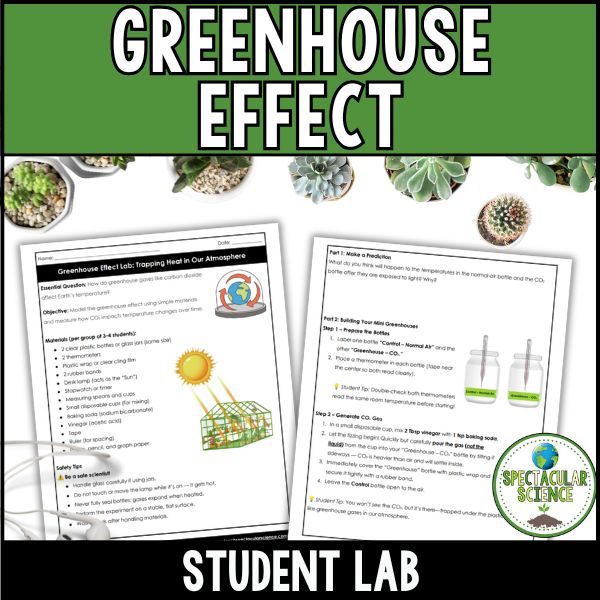
Students collect temperature data to explore how heat enters and becomes trapped in Earth’s atmosphere. Seeing the numbers change makes the greenhouse effect click. The lab naturally leads to thoughtful discussions about climate patterns.
24. Studying Weathering and Erosion with Sugar Cubes:
Simulating weathering and erosion by exposing sugar cubes to different environmental conditions offers a tangible demonstration of geological processes. Students can observe how external factors impact the integrity of the sugar cubes, drawing parallels to natural weathering and erosion.
The Sugar Cube Weathering Lab involves observing the gradual erosion and weathering of sugar cubes as they simulate geological processes, providing a hands-on experience to understand the effects of natural forces on Earth’s surface.

25. Analyzing Ice Cores for Climate Change Insights:
Exploring the concept of ice core sampling and its role in understanding past climates allows students to delve into paleoclimatology. By analyzing ice cores, students can uncover historical climate data, gaining valuable insights into Earth’s climatic variations over time.
25 hands-on learning opportunities in environmental science
Dive into the world of environmental science with 25 captivating hands-on learning opportunities. Educate and inspire students about ecosystems, conservation, and sustainability. From wildlife observation to recycling projects, these activities foster a deep connection to the environment.
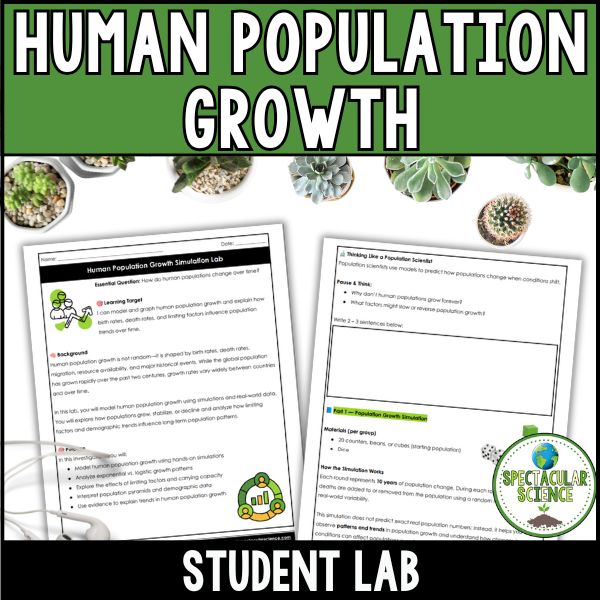
1. Modeling How Human Populations Change Over Time:
Students use a hands-on simulation to explore how birth rates, death rates, and limiting factors affect population growth. By analyzing trends and making predictions, students turn abstract population concepts into meaningful, data-driven discussions.
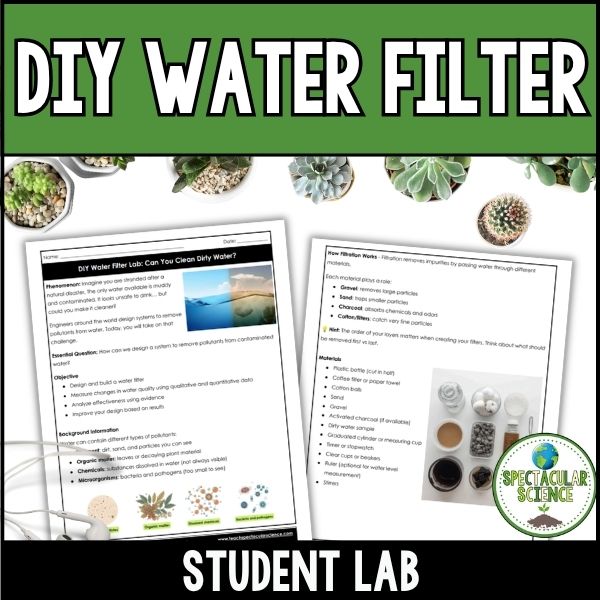
2. Investigating Water Pollution with DIY Water Filters:
Through the creation of do-it-yourself water filters, students can actively explore the impact of water pollution on aquatic ecosystems. This hands-on experiment provides insight into filtration methods and the importance of clean water, fostering an understanding of environmental challenges and potential solutions.
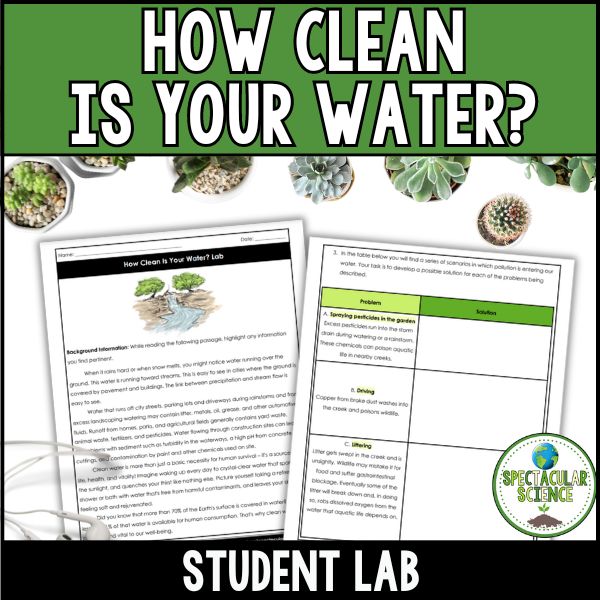
On this topic, check out this Clean Water lab, which is intended to take between 40 – 60 minutes and requires students to complete tasks both inside and outside of the classroom. They are also tasked with creating a poster to spread the word about water pollution.
3. Building Model Landfills to Understand Waste Management:
Constructing model landfills offers a practical approach to teaching waste management concepts. Students can explore the challenges of landfill design, waste decomposition, and the importance of reducing, reusing, and recycling materials to minimize environmental impact.
4. Testing Soil pH with Red Cabbage Indicator:
Utilizing a natural indicator like red cabbage, students can measure soil pH in a visually engaging experiment. This hands-on activity not only introduces fundamental concepts of soil science but also highlights the importance of maintaining proper pH levels for plant growth and ecosystem health.
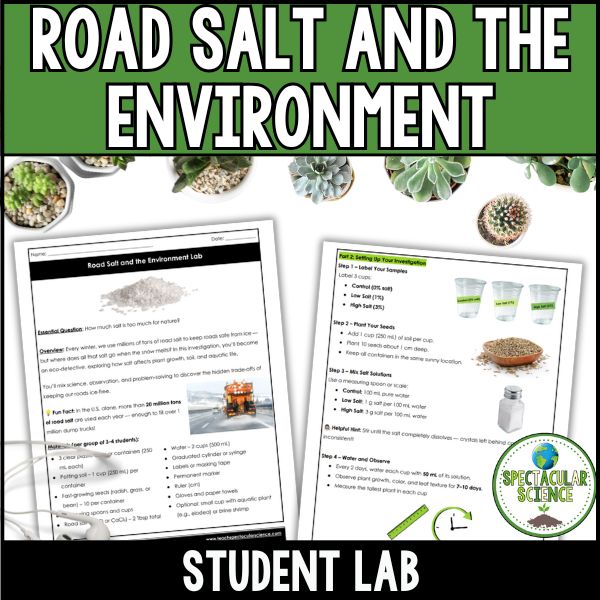
5. Exploring the Environmental Impact of Road Salt:
Students test how road salt affects water and living things using easy-to-gather materials. The results are eye-opening and often surprising. This lab connects chemistry to a real issue students see every winter.
6. Identifying Biodiversity through Leaf Litter Exploration:
Encourage students to explore biodiversity by examining leaf litter from different environments. This activity provides a tangible way to understand ecosystem diversity, emphasizing the interconnectedness of various species and the importance of preserving habitats.
7. Measuring Air Quality with DIY Air Quality Monitors:
Empower students to monitor air quality by building their own DIY air quality monitors. This hands-on experience not only introduces the concept of air pollution but also encourages students to collect and analyze data, fostering a deeper understanding of the environmental factors influencing air quality.
8. Studying Microorganisms in Pond Water:
Collect pond water samples and study the microorganisms within, allowing students to gain insights into the importance of microbial communities in aquatic ecosystems. This hands-on exploration enhances their understanding of biodiversity and the crucial role microorganisms play in maintaining ecological balance.
9. Creating Terrariums to Explore Ecosystems:
Build terrariums to simulate ecosystems, providing students with a tangible way to observe the interactions between plants, animals, and their environment. This hands-on project enhances understanding of ecological relationships and the delicate balance within ecosystems.
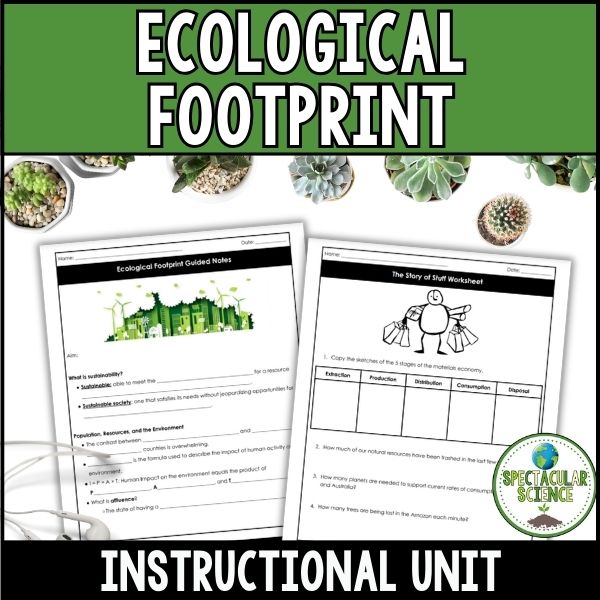
10. Analyzing Carbon Footprints with Household Calculations:
Engage students in a practical exploration of carbon footprints by analyzing their household activities. This activity not only promotes awareness of individual environmental impact but also encourages critical thinking about lifestyle choices and their contributions to climate change.
Throughout this week-long, low-prep unit, students focus on global ecological footprints while studying the following essential question, “How sustainable is your current lifestyle?” Students are introduced to the following terms: sustainability, sustainable society, affluence, hectare, ecological footprint, habitat destruction, etc.
11. Investigating the Impact of Oil Spills on Feathers:
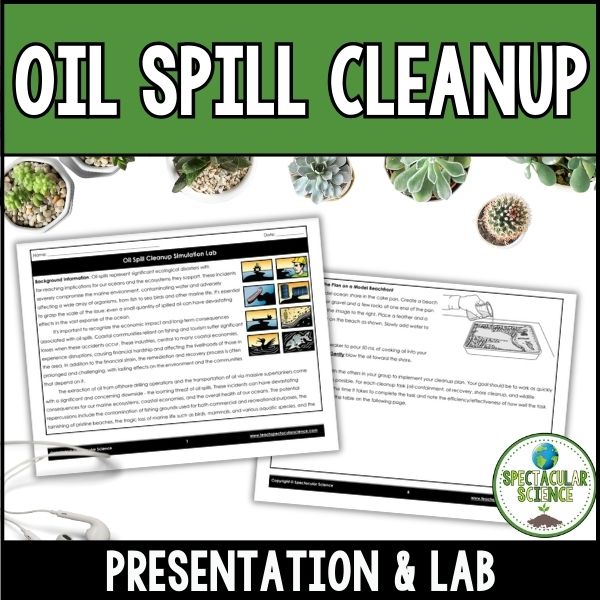
Simulate the effects of oil spills on wildlife by conducting experiments with feathers and various substances. This hands-on activity allows students to observe firsthand the challenges faced by birds and aquatic animals in the aftermath of oil spills, fostering awareness about environmental disasters and the importance of oil spill response strategies.
Love this idea? Here’s a done-for-you Oil Spill Cleanup Simulation Presentation, Lab and Answer Key. Your students will be actively engaged in conducting experiments, evaluating cleanup materials, and developing comprehensive cleanup plans. This lab encourages critical thinking as they weigh the effectiveness of materials against their potential environmental impact.
12. Designing and Testing Wind Turbines for Renewable Energy:
Encourage students to explore renewable energy sources by designing and testing their own wind turbines. This hands-on project not only introduces engineering principles but also highlights the potential of wind energy in sustainable power generation, sparking discussions on clean energy alternatives.
13. Mapping Watersheds with Modeling Clay:
Use modeling clay to create a physical representation of watersheds, allowing students to visualize the interconnectedness of water systems. This hands-on mapping activity helps students understand the flow of water, pollution pathways, and the significance of watershed management in preserving water quality.
14. Simulating Population Dynamics with Beans and Cups:
Model population dynamics using beans and cups to illustrate ecological concepts such as carrying capacity, competition, and resource availability. This hands-on experiment fosters an understanding of the factors influencing population growth and provides a tangible way to explore the delicate balance within ecosystems.
15. Monitoring Butterfly Populations with Transect Walks:
Conduct transect walks to observe and monitor butterfly populations in different environments. This hands-on approach to studying biodiversity allows students to collect data, analyze trends, and draw conclusions about the factors influencing butterfly populations, contributing to a broader understanding of ecosystem health.
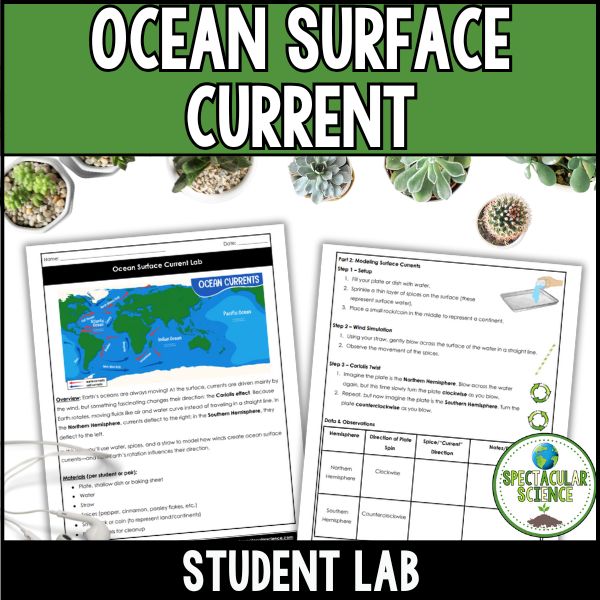
16. Investigating Ocean Surface Currents and Climate:
Students model ocean surface currents using water, color, and motion. They see how wind and Earth’s rotation move water around the planet. This lab makes climate connections much easier to understand.
17. Modeling Coral Bleaching with Beads and Heat:
Demonstrate the process of coral bleaching by using beads and heat to simulate the effects of elevated sea temperatures. This hands-on activity allows students to understand the vulnerability of coral reefs to climate change and the importance of coral conservation for marine biodiversity.
18. Examining Decomposition Rates in Different Environments:
Compare decomposition rates in various environments by setting up decomposition experiments. This hands-on exploration of organic decay provides insights into the factors influencing decomposition and highlights the role of decomposers in nutrient cycling within ecosystems.
19. Measuring Noise Pollution Levels in School Surroundings:
Measure and analyze noise pollution levels in and around the school environment using simple sound measurement tools. This hands-on activity not only raises awareness about the impact of noise pollution on human health but also encourages students to explore strategies for mitigating noise pollution in their communities.
20. Observing Bird Migration Patterns with Citizen Science:
Engage in citizen science projects focused on observing and documenting bird migration patterns. This hands-on approach to ornithology allows students to contribute valuable data to scientific research while gaining insights into the ecological importance of bird migration.
21. Investigating Invasive Species with Seed Dispersal Activities:
Explore the concept of invasive species by conducting seed dispersal activities. This hands-on experiment illustrates how invasive plants can spread and outcompete native species, emphasizing the ecological consequences of introduced species in different ecosystems.
22. Analyzing the Impact of Deforestation on Soil Erosion:
Simulate the impact of deforestation on soil erosion using hands-on experiments with soil and vegetation. This activity allows students to observe how tree removal influences soil stability, emphasizing the importance of sustainable forestry practices in maintaining healthy ecosystems.
23. Simulating Wetland Ecosystems in Miniature:
Create miniature wetland ecosystems to explore the unique characteristics and functions of wetlands. This hands-on project provides students with a practical understanding of the ecological services wetlands offer, including water purification, habitat provision, and flood control.
24. Building Rain Gardens to Mitigate Runoff:
Design and construct rain gardens to mitigate runoff and promote sustainable water management. This hands-on activity empowers students to address local environmental challenges, emphasizing the role of green infrastructure in reducing pollution and enhancing urban sustainability.
25. Studying the Effects of Light Pollution on Wildlife:
Investigate the impact of light pollution on wildlife behavior and ecosystems. Through hands-on experiments and observations, students can explore how artificial light affects nocturnal animals, plant growth patterns, and overall ecosystem dynamics, fostering an understanding of the importance of preserving natural darkness.
25 hands-on learning opportunities in other Sciences
Ignite curiosity across various scientific disciplines with 25 hands-on learning opportunities beyond Earth and environmental science. Uncover the mysteries of physics, chemistry, biology, and more through interactive and educational activities. These experiences create a well-rounded understanding of the scientific world.
- Exploring Density with Layered Liquids: Explore the concept of density by layering liquids of different densities, such as oil, water, and syrup, to observe their stratification.
- Investigating Factors That Affect Photosynthesis: Students collect data to see how light or carbon dioxide affects photosynthesis. Watching results change makes the process feel real. This lab emphasizes evidence over memorization.
- Classifying Objects Using Dichotomous Keys: Students create and use dichotomous keys to classify candy. The process is logical, fun, and surprisingly challenging. It is a great way to practice scientific thinking.
- Simulating Cell Division with Play-Doh: Represent cell division using Play-Doh to illustrate mitosis and meiosis, making the complex process more tangible and engaging.
- Extracting and Observing Genetic Material: Students extract real DNA using strawberries. Seeing DNA appear never gets old. This lab makes molecular biology feel exciting and accessible.
- Constructing 3D Atom Models with Marshmallows: Build 3D models of atoms using marshmallows and toothpicks to visualize the arrangement of protons, neutrons, and electrons.
- Visualizing Osmosis Using Eggs and Gummy Bears: Students place eggs and gummy bears in different solutions to observe how water moves in and out of cells. The dramatic size and mass changes happen quickly and make osmosis easy to see. This lab builds strong connections to diffusion, concentration gradients, and membrane transport in a way students remember.
- Modeling How Food Is Broken Down in the Body: Students simulate digestion using common classroom materials to model both mechanical and chemical breakdown. Watching the process unfold helps everything click. This lab makes digestion feel concrete instead of abstract.
- Analyzing Blood Types with Simulated Blood: Create simulated blood with different antigens to understand blood typing and compatibility.
- Investigating How Physical Activity Affects Heart Rate: Students measure their pulse before and after physical activity. The data is immediate, personal, and engaging. It is a simple setup with powerful connections to the circulatory system.
- Simulating Antibiotic Resistance with Candy Sorting: Use candies to simulate bacterial populations and demonstrate the concept of antibiotic resistance.
- Modeling Natural Selection with Bird Beak Adaptations: Illustrate natural selection by adapting bird beak shapes using tools to collect “food” items, mimicking evolutionary processes.
- Testing Reaction Rates with Alka-Seltzer and Water: Explore chemical reaction rates by varying conditions with Alka-Seltzer and water.
- Exploring Photosynthesis with Floating Spinach Disks: Investigate photosynthesis by observing the floating behavior of spinach disks in different light conditions.
- Investigating Bioluminescence with Glow Sticks: Explore the concept of bioluminescence by activating glow sticks and discussing the chemical reactions involved.
- Constructing Food Chains and Webs with Yarn: Build visual representations of food chains and webs using yarn to depict interconnections between organisms in ecosystems.
- Investigating How Temperature Affects Reaction Rate: Students test how temperature changes the speed of a chemical reaction. The results are quick and easy to compare. This lab clearly shows cause-and-effect relationships.
- Measuring How the Nervous System Responds to Stimuli: Students test their own reaction time using simple tools and repeated trials. Comparing results keeps students engaged while introducing experimental design. It is fast, interactive, and full of great data.
- Investigating Cellular Respiration Using Yeast: Students use yeast, sugar, and balloons to model cellular respiration. Gas production makes energy release easy to see. It is low-prep and consistently engaging.
- Investigating Surface Tension with Water Droplets: Explore surface tension by observing the behavior of water droplets on different surfaces.
- Testing Antacid Effectiveness with Vinegar: Assess the effectiveness of antacids by conducting experiments that simulate stomach acidity using vinegar.
- Demonstrating Simple Genetics with Punnett Squares: Use Punnett squares to demonstrate basic principles of genetics, predicting the outcomes of genetic crosses.
- Simulating Natural Selection with Peppered Moths: Use peppered moths to simulate the effects of natural selection based on environmental changes.
- Observing Crystallization with Borax Snowflakes: Witness the process of crystallization by growing borax snowflakes and discussing the formation of crystal structures.
- Analyzing Sound Waves with DIY String Telephones: Explore the properties of sound waves by creating DIY string telephones to demonstrate vibration and transmission of sound.
25 hands-on Interdisciplinary learning Opportunities
Foster interdisciplinary learning with 25 hands-on activities that seamlessly blend science subjects. These cross-curricular experiences encourage critical thinking and problem-solving skills by integrating elements from Earth science, environmental science, physics, and more. Enhance your students’ education with dynamic, interconnected lessons.
- Recycled Art Sculptures: Fuse environmental science and art by creating sculptures using recycled materials, emphasizing sustainability and creative expression.
- Math in Nature Scavenger Hunt: Combine math and environmental science by sending students on a scavenger hunt to find geometric shapes and patterns in nature.
- Historical Weather Analysis: Merge history and earth science by having students research historical events and analyze corresponding weather patterns to draw connections.
- Physics of Sports: Explore the physics of sports equipment, such as calculating the trajectory of a basketball or understanding the aerodynamics of a soccer ball in motion.
- Chemical Reactions in Cooking: Integrate chemistry and home economics by having students experiment with chemical reactions while cooking, such as leavening agents in baking.
- Geography and Climate Zones: Study the intersection of geography and earth science by examining climate zones worldwide and discussing their impact on ecosystems.
- Literary Element Ecosystems: Connect literature and biology by having students analyze ecosystems within novels, identifying flora and fauna and discussing their roles.
- Music and Sound Waves: Combine physics and music by exploring the science of sound waves, instrument vibrations, and the principles behind musical pitch.
- Historical Geology Timeline: Integrate history and geology by creating a timeline that illustrates the Earth’s geological history alongside major historical events.
- Botanical Illustrations: Merge art and biology by having students create detailed botanical illustrations, focusing on plant structures and adaptations.
- Archaeological Excavation Simulation: Blend history and earth science by organizing a simulated archaeological dig, allowing students to uncover and analyze artifacts.
- Eco-Friendly Urban Planning: Combine environmental science and geography by having students design eco-friendly urban plans that consider sustainability and green spaces.
- Digital Storytelling of Scientific Discoveries: Integrate technology and science by having students create digital stories or presentations showcasing notable scientific discoveries.
- Statistical Analysis of Climate Data: Merge mathematics and environmental science by having students collect and analyze climate data, identifying trends and making predictions.
- Health and Nutrition Lab: Combine biology and health sciences by investigating the nutritional content of various foods, linking cellular processes to overall well-being.
- Astronomy and Mythology Connections: Explore the connections between astronomy and mythology by studying how ancient cultures interpreted celestial events in their myths.
- Weather Forecasting Project: Integrate technology, mathematics, and meteorology by having students create their own weather forecasting models using available data.
- Community Garden Project: Blend environmental science, biology, and community outreach by establishing a community garden, fostering teamwork and sustainable practices.
- Physics of Roller Coasters Design Challenge: Combine physics and engineering by having students design and build miniature roller coasters, applying principles of force and motion.
- Culinary Chemistry Extravaganza: Integrate chemistry and culinary arts by experimenting with molecular gastronomy techniques and understanding the chemical reactions in cooking.
- Literary Ecology Analysis: Connect literature and environmental science by analyzing the ecological impact of settings in literary works, discussing the symbiotic relationship between characters and their environment.
- Historical Scientific Innovations Timeline: Merge history and science by creating a timeline highlighting key scientific innovations throughout different historical periods. Bring the story of science to life with the Timeline of Biology’s Big Discoveries Activity, a collaborative project where students explore the most groundbreaking moments in biological history. From the first glimpse of a cell to the cloning of Dolly the Sheep, students investigate key discoveries and the scientists behind them—while creating a vibrant timeline that charts biology’s evolution.
- Mathematical Patterns in Nature: Combine mathematics and biology by identifying and exploring mathematical patterns found in the structures of plants, animals, and natural formations.
- Environmental Ethics Debates: Integrate philosophy and environmental science by engaging students in debates about ethical considerations related to environmental issues.
- Digital Mapping of Natural Disasters: Blend geography, technology, and earth science by having students create digital maps showcasing the occurrence and impact of natural disasters around the world.
Final Words
The key to fostering curiosity and understanding in our classrooms lies in the diverse array of interactive science activities at our disposal. From captivating experiments to innovative projects, the possibilities are endless. So, here’s your challenge: embrace a little bit more creativity and discovery than you did yesterday.
With each hands-on experience, we not only enrich the minds of our students but also cultivate a lifelong love for science. Here’s to sparking that scientific spark and nurturing the next generation of brilliant minds!
How many of these have you tried with your students? Brag in the comments below. Happy teaching!